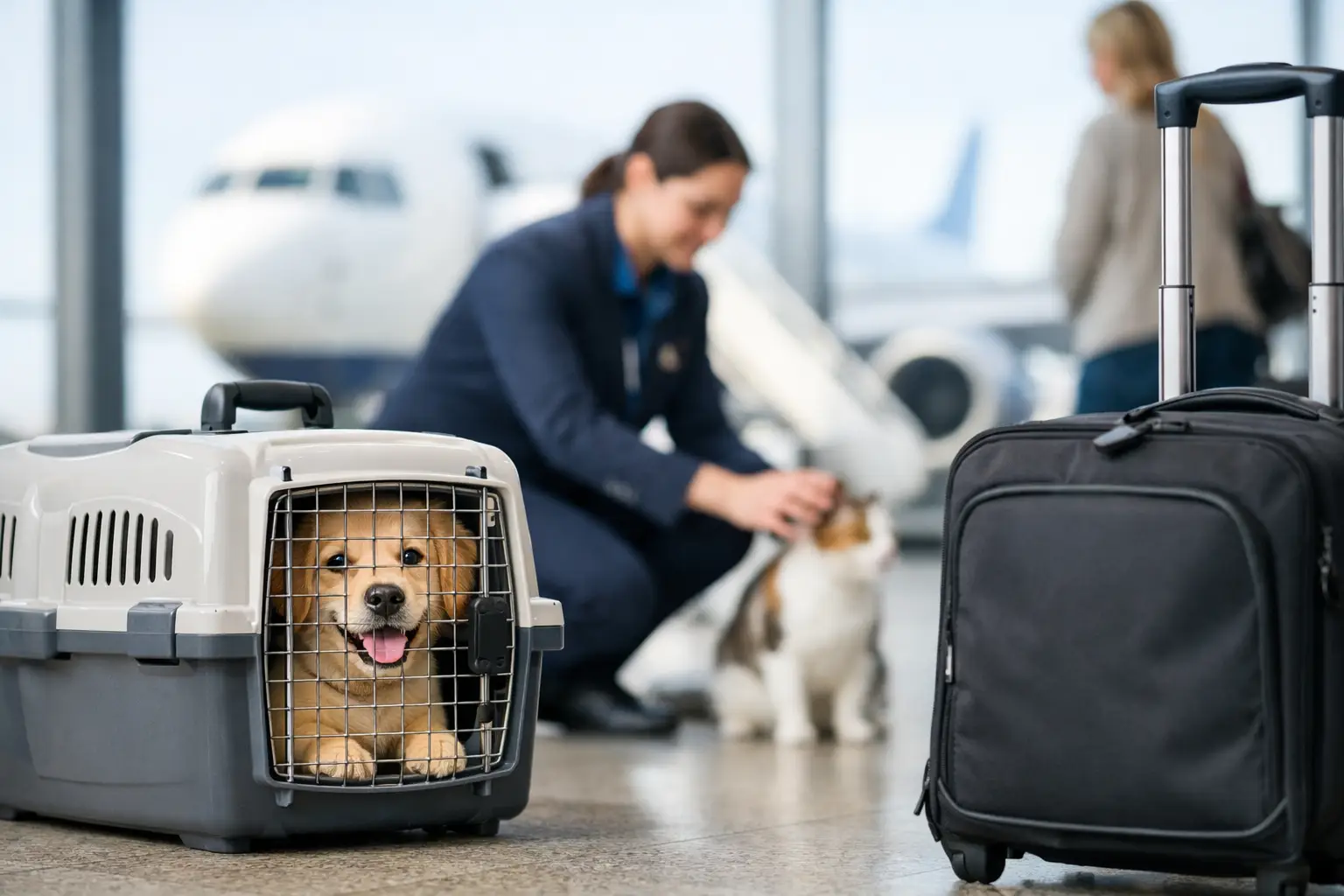
A flight can feel like the fastest way to reach family, begin a move, or take a long-awaited vacation. For your pet, it is a major change in routine, sounds, spaces, and expectations. That is why airline pet travel works best when the plan begins with your pet’s wellbeing, not with the ticket.
Bringing your pet along can be a wonderful choice. It can also be the wrong choice for a particular animal, route, or season. A calm, confident trip comes from knowing the difference early enough to make a thoughtful decision.
Start With Your Pet, Not the Airline
Before comparing fares or choosing a flight time, consider how your pet typically handles unfamiliar situations. A dog who settles easily in a carrier and recovers quickly from new environments may be a stronger candidate for flying than a dog who becomes distressed in busy places. The same is true for cats, who may seem relaxed at home but find travel and disruption especially difficult.
Age, health, temperament, and breed all matter. Very young pets, senior pets, animals with heart or respiratory concerns, and pets with a history of severe anxiety may need a different travel plan. Short-nosed breeds can face additional breathing risks, particularly in warm conditions. Your veterinarian can help assess whether flying is appropriate, but they cannot make the decision in isolation. You know your pet’s daily behavior best.
If air travel is not a good fit, that does not mean your pet is being left out. Driving, choosing a closer destination, arranging pet care with someone they know, or delaying the trip can be the more loving option. Responsible pet travel is not about making every journey possible. It is about making the right journey possible.
Understand How Airline Pet Travel Works
Airlines generally allow pets to travel either in the cabin or in a separate, climate-controlled cargo area. In-cabin travel is often preferred because your pet remains close to you, but it is limited by the airline’s size, weight, carrier, route, and availability rules. Cabin pet spaces can sell out even when passenger seats are still available.
Cargo travel may be necessary for larger dogs or some international itineraries, but it deserves extra care. Policies vary widely, and weather restrictions may apply. Some airlines limit or pause cargo pet travel during periods of extreme heat or cold. Others do not accept certain breeds or may have restrictions tied to aircraft type.
Do not assume that an airline’s pet policy is the same across every flight. A route with a connection can introduce additional rules, facilities, and risks. Codeshare flights can be particularly confusing because the airline selling the ticket may not be the airline operating the flight. Confirm the policy for every part of the itinerary before you commit.
It also helps to look beyond the pet fee. A lower ticket price may not be the best value if it requires a tight connection, a long layover, or travel at the hottest point of the day. Direct flights are often worth prioritizing because they reduce handling, transfers, and the overall time your pet spends in transit.
Reserve Your Pet’s Space Early
Your pet needs a reservation, not just a carrier at check-in. Contact the airline as soon as you book your own seat and ask for confirmation that your pet is added to the reservation. Keep a record of the confirmation, the carrier dimensions allowed on your specific flight, and the documents you need to bring.
Then check again shortly before departure. Airline policies can change, and travel details sometimes shift when a flight is rebooked or an aircraft changes. A quick confirmation can prevent a stressful surprise at the airport.
Make the Carrier a Familiar Place
The carrier is not simply a container for the flight. It is your pet’s personal space throughout security, boarding, the flight, and any time spent waiting. The more familiar it feels before travel day, the better.
Choose an airline-approved carrier with enough room for your pet to stand, turn around, and lie down comfortably. For in-cabin travel, soft-sided carriers often fit under seats more easily, but the dimensions must meet the airline’s requirements. Measure carefully, including the carrier’s height when it is fully packed and resting on the floor.
Introduce the carrier well before the trip. Leave it open at home with a familiar blanket or a piece of clothing that smells like you. Offer treats nearby, then inside. Let your pet choose to enter rather than placing them inside immediately. Build up to short periods with the door closed, followed by calm praise and a reward.
A pet who has practiced resting in a carrier is not guaranteed to enjoy flying. But practice can make the carrier feel predictable rather than alarming. That familiarity matters when everything else around them is new.
Prepare Paperwork Before It Becomes Urgent
Travel requirements depend on where you are going, how you are getting there, and sometimes where you are connecting. Domestic travel may require proof of current rabies vaccination, a health certificate, or both. International trips can involve import permits, microchip requirements, vaccination timelines, parasite treatments, laboratory tests, and official endorsements.
The timing can be as important as the paperwork itself. Some destinations require a vaccine or test to be completed weeks or months before arrival. Waiting until the week before departure may leave no safe or legal path forward.
Keep physical copies of your pet’s documents with you, and store digital copies where you can access them without relying on airport Wi-Fi. Include your veterinarian’s contact information, vaccination records, any required health certificate, and a recent photo of your pet. The photo is simple but useful if you are separated unexpectedly.
For complex trips, organize every requirement by date: what your pet needs, who issues it, when it must be completed, and when it expires. This is the kind of detail that turns uncertainty into a manageable plan.
Build a Kinder Flight Day
Flight day should be quiet and unhurried wherever possible. Give your dog time for a familiar walk and bathroom break before leaving for the airport. For cats, focus on a calm departure and a secure carrier. Feed according to your veterinarian’s guidance, but avoid introducing new foods or treats just because you are traveling.
Arrive earlier than you normally would. Checking in with a pet can take longer, and you may need to visit a pet relief area before boarding. Keep your pet’s essentials easy to reach: absorbent pads, waste bags, wipes, a collapsible bowl, a small amount of food, water, and any prescribed medication. Label the carrier with your contact information and attach an ID tag to your pet’s collar or harness.
At security, you may need to remove your pet from the carrier while the carrier goes through screening. Use a secure harness and leash for dogs. For cats or pets likely to bolt, ask whether screening can be handled in a private room. Planning for that moment can prevent one of the most frightening travel-day scenarios.
Avoid sedating your pet unless your veterinarian specifically recommends it. Sedatives can affect balance, breathing, and temperature regulation, particularly at altitude. If anxiety is a concern, talk with your veterinarian well in advance about safer options and try any prescribed medication at home first, never for the first time on travel day.
Give Yourself Permission to Change the Plan
The best airline pet travel plan includes a backup plan. Flights are delayed, gates change, weather shifts, and pets sometimes tell us clearly that they are not coping well. If your animal shows signs of significant distress before departure, it may be kinder to postpone or choose another arrangement.
This is not a failure of preparation. It is what pet-first travel looks like in practice: staying attentive, adapting when needed, and making decisions that protect the relationship at the center of the trip.
A thoughtful plan gives you more than a checklist. It gives you room to focus on your pet, respond calmly when plans change, and step into the next part of your journey together with confidence.