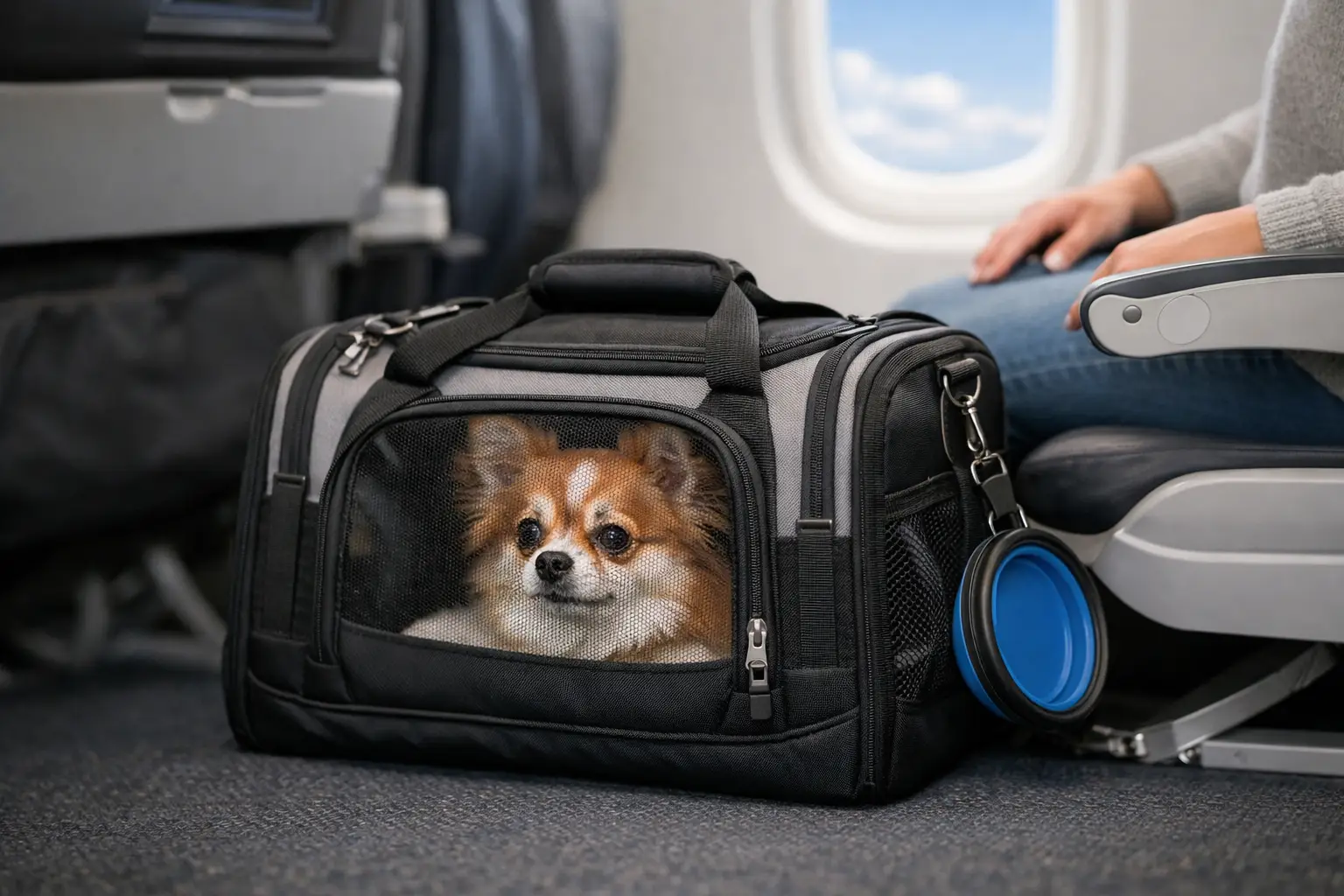
The moment your pet is tucked beneath the seat in front of you, the carrier becomes more than a travel accessory. It is their quiet place, their safety boundary, and the space that helps them stay close to you during an unfamiliar experience. The best airline pet carrier is the one that fits your specific pet, meets your airline’s current rules, and gives both of you a calmer way to fly.
A carrier can look roomy online and still be too tall for an aircraft seat. It can meet the listed dimensions but feel unstable when lifted. That is why choosing well starts with your pet’s comfort and the details of your exact flight, not a generic "airline-approved" label.
What Makes the Best Airline Pet Carrier?
For most pets flying in the cabin, a soft-sided carrier is the practical choice. Its flexible top and sides can help it fit under a seat while still providing a little give when your dog or cat shifts position. Hard-sided kennels can offer more structure, but they are often less forgiving in the limited space below an airline seat.
The right carrier should let your pet stand up, turn around, and lie down naturally. That does not mean choosing the largest bag you can find. An oversized carrier may be refused at check-in if it does not fit beneath the seat, and extra empty space can make a nervous pet slide around during movement. Aim for secure, usable space rather than a carrier that feels cavernous.
Look for a stable base that will not sag when you lift it, along with breathable mesh panels on more than one side. Good ventilation matters at every stage of travel, from the car ride to the terminal to waiting at the gate. Secure zippers are equally important. A carrier should close reliably, with openings that cannot be pushed apart by an anxious paw or nose.
Comfort is not an extra
A washable, absorbent liner helps manage small accidents and gives your pet a more comfortable surface than the carrier floor alone. For some pets, a familiar-smelling blanket can be reassuring, as long as it does not take up too much room or block ventilation. Keep the setup simple: a crowded carrier is harder to clean and can make a warm pet less comfortable.
Consider how the bag feels in your hands, too. A padded shoulder strap, balanced handles, and a shape that stays level can make a meaningful difference while you move through a busy airport. Your pet notices sudden tilting and jostling, even when you are trying your best to hurry.
Match the Carrier to Your Airline and Aircraft
There is no single carrier that every airline will accept on every flight. Airlines set their own limits for carrier dimensions, weight, pet types, fees, and the number of pets allowed in the cabin. Even within one airline, available space can vary by aircraft and seat location.
Check the airline’s pet policy before you buy the carrier and again before you leave for the airport. Confirm the maximum under-seat dimensions for your itinerary, including any connecting flights operated by another carrier. A carrier that works on your first flight may not meet the policy for the second one.
It is also wise to reserve your pet’s cabin spot as soon as your flight is booked. Airlines commonly limit the number of in-cabin pets on each departure. Do not assume that buying a ticket means your pet is automatically confirmed.
Measure your pet the useful way
Measure your pet while they are standing naturally, not while curled up for a nap. Note their length from chest to base of tail, their shoulder height, and their weight. Then compare those measurements to the carrier’s interior dimensions, not only the dimensions printed on its exterior packaging.
Your pet should be able to settle without being compressed by the carrier roof. At the same time, remember that soft-sided carriers can flex slightly under an airline seat. This can be helpful, but it is not a reason to buy a carrier that is clearly too tall. A bag that needs to be forced into place is not a comfortable or dependable choice.
If your pet is close to the airline’s size or weight limit, call the airline before booking. Ask whether your route, aircraft, and cabin class can accommodate your pet. Clear answers before travel day are far easier than a stressful surprise at the airport.
Choose Features That Support a Calm Flight
The best carrier features are often the least flashy ones. Prioritize quiet, secure construction over decorative details or pockets that add bulk. A low-profile bag is easier to manage under a seat and less likely to snag as you move through an aisle.
A top-loading opening can be especially helpful for pets that dislike being guided through a front door. It gives you a gentler way to place them inside without pulling or rushing. A side opening is still useful for letting your pet enter voluntarily during training at home.
Think carefully about visibility. Some pets relax when they can see you through mesh; others become more alert when they watch every passing suitcase and stranger. A carrier with breathable mesh and a simple privacy flap gives you options. You can offer visual reassurance when your pet needs it, then reduce stimulation once they are settled.
Water access deserves planning as well. A spill-proof bowl or small water source may be useful during long waits, but avoid overfilling anything before boarding. Follow your airline’s guidance, and offer water thoughtfully before and after the flight. Your veterinarian can advise you on your pet’s individual hydration needs, especially for puppies, seniors, or pets with medical conditions.
Train Before Travel Day
Even the most thoughtfully designed carrier cannot replace preparation. Your pet should recognize it as a familiar resting place long before the airport. Start by leaving the carrier open at home with a comfortable liner inside. Let your pet investigate at their own pace, and reward calm choices such as stepping in, lying down, or resting near it.
Gradually close the door for brief periods while you stay nearby. Build up to carrying your pet around the home, taking a short drive, and spending a few quiet minutes in a busier environment. Keep sessions short enough that your pet can succeed. The goal is not to make them endure the carrier. It is to teach them that being inside it is safe, predictable, and temporary.
Avoid introducing a new carrier on the morning of a flight. New smells, unfamiliar closures, airport noise, and separation from your usual routine can stack up quickly. Familiarity gives your pet one steady point in a day full of change.
Prepare for Security and the Airport Environment
At TSA screening, you will usually need to take your pet out of the carrier while the empty carrier goes through X-ray screening. Use a secure harness and leash for dogs. For cats and other pets who may panic or slip away, ask a TSA officer about a private screening option rather than taking chances in an open, crowded area.
Keep your pet’s required documents, identification, and health information easy to reach. Bring a small cleanup kit with waste bags, wipes, and an extra liner. These are not exciting purchases, but they give you a practical response if plans get delayed or an accident happens.
Before departure, give your pet a chance to relieve themselves and have a little calm movement. Avoid a heavy meal immediately before travel unless your veterinarian has given different guidance. Never sedate your pet without direct veterinary advice. Sedation can create risks at altitude and may make it harder to recognize how your pet is feeling.
When Flying May Not Be the Best Choice
A carrier can improve safety and comfort, but it cannot make every flight appropriate for every animal. Very young pets, pets with respiratory or heart concerns, highly fearful animals, and pets that exceed cabin limits may need a different travel plan. Brachycephalic breeds, including many pugs, French bulldogs, Persian cats, and similar flat-faced pets, deserve particular veterinary guidance because breathing can be more difficult under stress or in warm conditions.
A pre-travel veterinary conversation is part of responsible planning, especially if your pet has not flown before. Your veterinarian can help you assess fitness to travel, required health paperwork, and ways to reduce stress that fit your pet’s age, temperament, and medical history.
Choosing a carrier is one practical act of care, but your pet will feel the benefit in the preparation around it. Check the rules, practice the routine, and leave room in your plans for their needs. With organized guidance from tools like 360Pet and a carrier your pet already trusts, you can travel together with greater confidence.