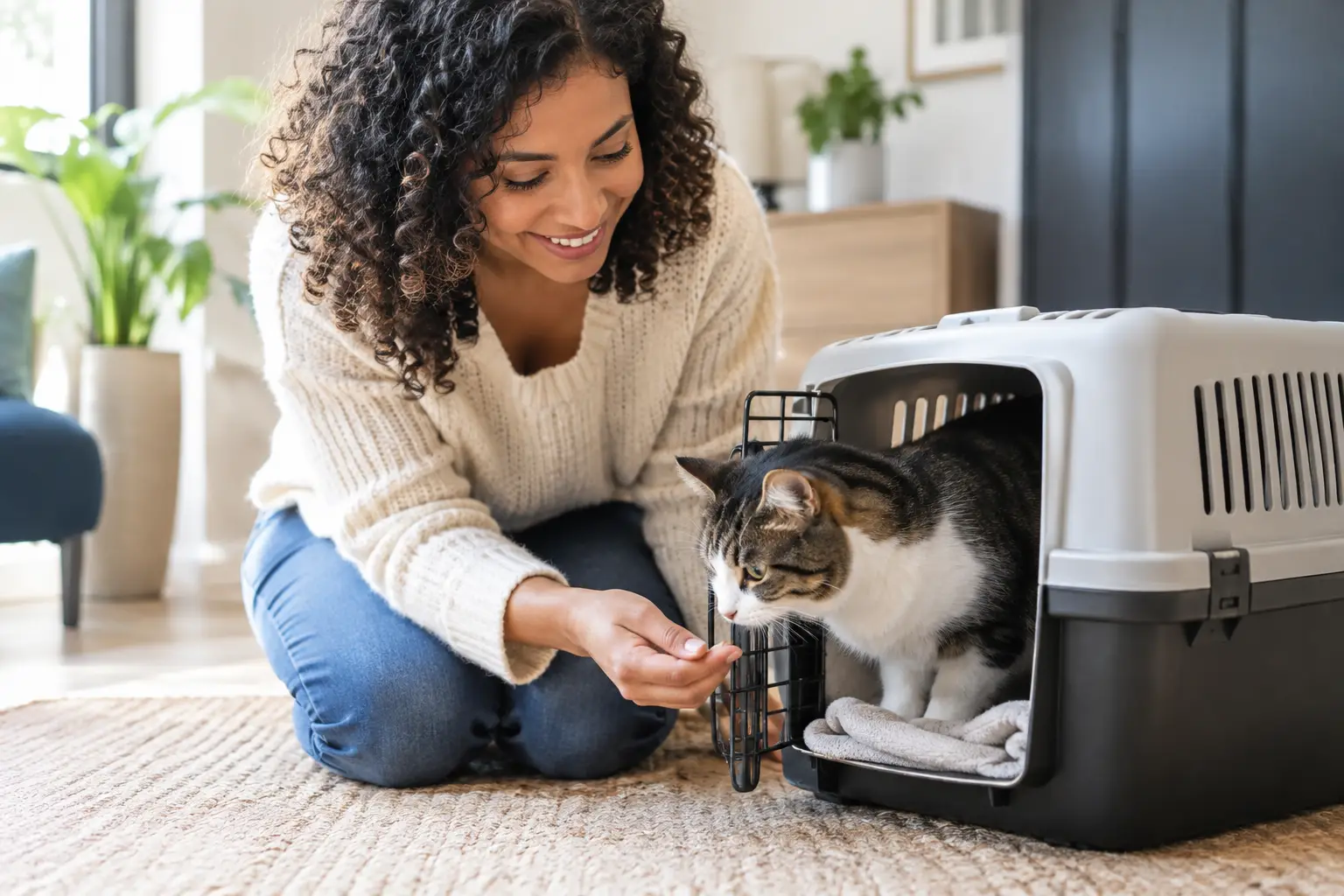
The carrier comes out, and suddenly your cat has a meeting under the bed. It is a familiar scene for many pet parents, especially when a vet visit, road trip, or move is on the calendar. Cat carrier acclimation changes the carrier from a suspicious plastic box into a normal, even comforting, part of home life. The goal is not to make every cat love travel. It is to help them feel more prepared, secure, and less startled when a trip is necessary.
Why Cat Carrier Acclimation Is Worth the Time
Cats thrive on familiarity. A carrier that appears only before a car ride can become a warning sign, even if the destination is somewhere helpful or the trip is short. When the carrier lives out in the open and becomes connected with quiet, positive moments, it loses some of its mystery.
This matters beyond the car ride itself. A cat who can enter a carrier with less resistance is often easier to prepare for routine appointments, visits with family, hotel stays, and relocation days. For pet parents, that means less last-minute chasing, fewer tense moments, and more room to focus on the details that make traveling together feel manageable.
Progress may be quick for a curious kitten and slower for a cautious adult cat. Both are normal. Think in small wins: looking inside the carrier, stepping in for a treat, or settling there for a few minutes with the door open. Those moments add up.
Start With a Carrier Your Cat Can Use Comfortably
Before training begins, take a close look at the carrier itself. Your cat should be able to stand, turn around, and lie down comfortably. A carrier that is too small can feel cramped, while one that is oversized may slide around in the car. For many cats, a sturdy hard-sided carrier with both a front opening and a removable top makes loading and handling easier. Soft-sided carriers can be useful for some travel situations, but make sure they hold their shape and have reliable closures.
Place a familiar towel, small blanket, or shirt that smells like home inside. Avoid using a brand-new, heavily scented fabric. Familiar smells can make a new setup feel less foreign. If your cat tends to chew or claw bedding, choose something simple and safe for their usual habits.
Keep the carrier in a calm, easy-to-reach spot, such as a living room corner or bedroom. Do not hide it in a closet until travel day. The whole point is for your cat to learn that its presence does not always predict a disruption.
Make the Carrier Part of Everyday Life
For the first few days, leave the carrier door open and do very little else. Let your cat inspect it on their own schedule. Some cats will walk right in. Others may sniff it from three feet away and decide that is plenty of socializing for one afternoon.
You can gently encourage curiosity by placing a favorite treat just outside the entrance. Once your cat is comfortable taking it, place treats just inside the doorway, then farther toward the back over several sessions. A small portion of a favorite meal can work, too, as long as it does not create pressure. If your cat will not approach, move the food farther away and try again later.
Quiet comfort also helps. Toss in a favorite toy, offer calm praise, or sit nearby while your cat explores. The carrier should not become a stage for repeated commands or a test your cat can fail. Let choice do much of the work.
Build comfort before closing the door
When your cat is willingly going inside, give them time to settle with the door open. You might offer a treat, then walk away for a minute so the carrier remains a low-pressure place. If they nap inside, excellent. If they only step in and back out, that is still progress.
The next step is closing the door briefly while your cat is relaxed inside. Start with just a second or two, offer a treat through the door if practical, then open it before your cat becomes upset. Repeat on different days, gradually adding a little time. Keep your movements unhurried and your voice normal.
If your cat paws at the door, vocalizes intensely, or stops accepting treats, the session may have moved too fast. Go back to the last step that felt comfortable. Slowing down is not losing progress. It is how you build trust.
Practice the Motions of Travel in Small Steps
Being inside the carrier is one skill. Being carried, placed in the car, and hearing unfamiliar sounds are separate skills. Introduce them one at a time.
First, lift the carrier a few inches, set it back down, and release your cat. Later, carry it calmly across one room. When that feels familiar, practice walking through the home or sitting in a parked car for a few minutes. Keep these early sessions brief, quiet, and followed by something your cat enjoys back at home.
A short practice drive can be useful once your cat is handling the earlier steps well. Choose a calm time of day and a simple route. Secure the carrier so it does not shift, keep the car temperature comfortable, and avoid playing loud music. A smooth five-minute trip can be more helpful than a long practice run that leaves everyone frazzled.
Every cat has a different comfort level. Some may adjust well to several short rides. Others may be better served by carrier practice at home until an actual trip is needed. For upcoming travel, give yourself more lead time than you think you need. A move or vacation already has enough moving pieces without trying to introduce the carrier the night before.
Make Travel Day More Predictable
On travel day, try to protect the routine your cat knows. Prepare the carrier ahead of time with familiar bedding, and keep it in the same place until it is time to leave. Close doors to bedrooms or other hard-to-reach hiding spots before you need to load up. This is not about cornering your cat. It simply prevents a stressful search when the clock is ticking.
Move slowly and use the approach you practiced. If your carrier has a removable top, that may make it easier to place a reluctant cat inside gently rather than pushing them through a front door. Covering part of the carrier with a light, breathable cloth may help reduce visual stimulation for some cats, but always maintain good airflow and check that your cat stays comfortable.
For longer journeys, organize your pet’s essentials before departure: identification details, feeding supplies, a familiar item, cleanup materials, and any travel paperwork your destination requires. A planning tool such as 360Pet can help keep pet-friendly stops and trip details in one place, so the carrier is not just one more thing to remember.
When Your Cat Needs a Slower Plan
Some cats have a history of panicking around carriers or become distressed despite patient practice. That does not mean they are being difficult, and it does not mean you have failed. They may need shorter sessions, a different carrier style, or guidance tailored to their behavior and travel needs.
If you have concerns about your cat’s stress during necessary travel, talk with your veterinarian well before the trip. They can help you consider your cat’s individual situation and decide on an appropriate plan. Avoid trying unfamiliar products or major changes for the first time on departure day.
Keep the Good Association Going
After an appointment or trip, leave the carrier out again. Open the door, refresh the bedding if needed, and occasionally drop in a treat or toy when no travel is happening. This small habit prevents the carrier from becoming a once-in-a-while signal that something big is about to change.
Your cat may never greet the carrier like a favorite cardboard box, and that is okay. The real win is a cat who recognizes it as a familiar, safe-enough space - and a pet parent who can head out with a little more calm, preparation, and confidence.