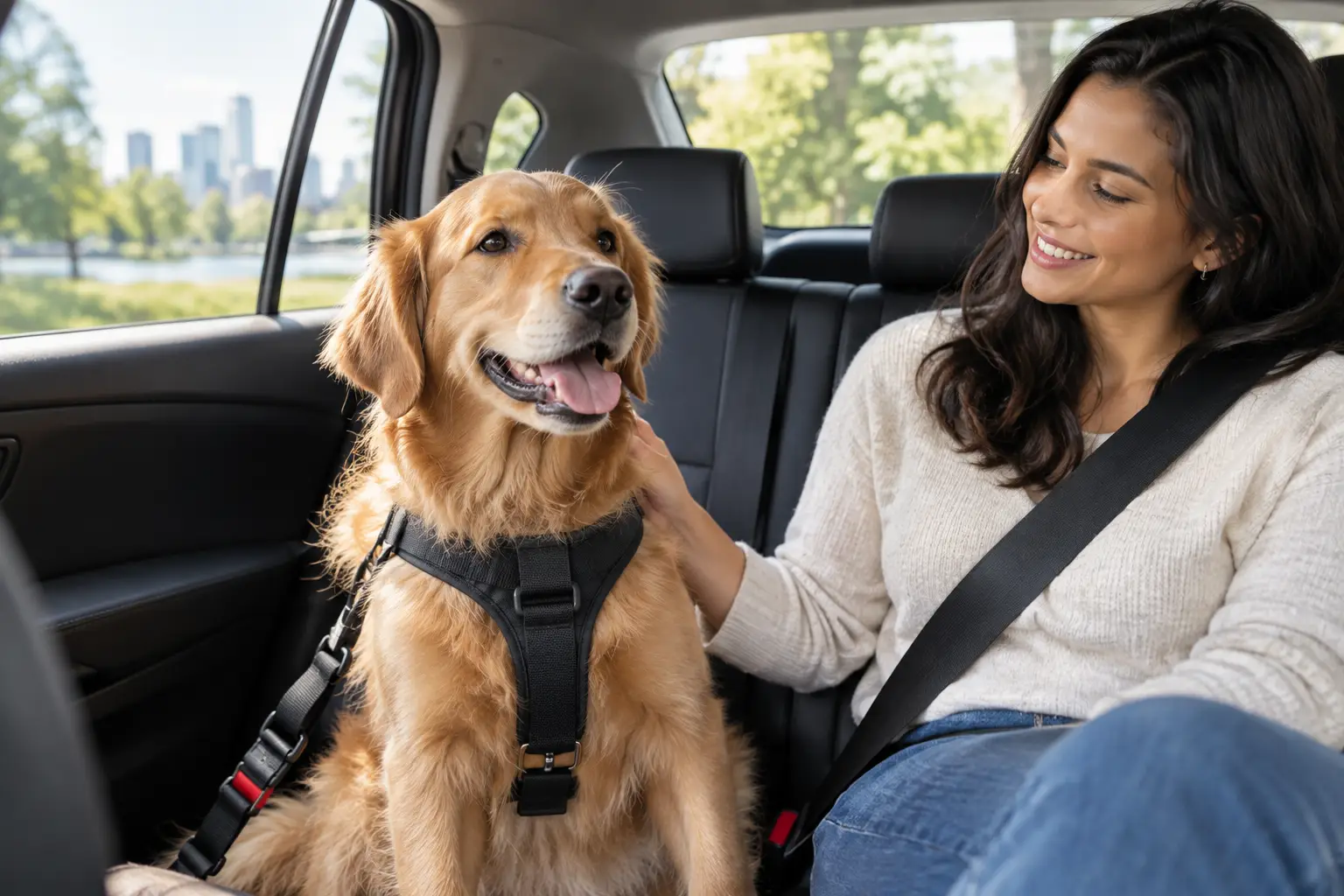
The backseat may be your dog’s favorite window-viewing spot, and your cat may have strong opinions about every mile from inside a carrier. But do pets need seat belts? For most car trips, some form of secure restraint is a smart part of traveling together with confidence. It helps keep your pet in one place when the car turns, stops, or encounters the everyday surprises of the road.
A pet seat belt is not quite the same thing as the one people use. Usually, it is a vehicle tether that clips to a properly fitted travel harness, or a carrier that is secured with the car’s seat belt. The right choice depends on your pet, the vehicle, and the type of trip you are taking.
Why pets should be secured in the car
An unrestrained pet can move around much more than you expect, especially on a quick drive that feels familiar. A dog may climb toward the front seat when you stop for coffee. A cat may slip beneath a seat after hearing a horn. Even a calm pet can lose balance during a sudden stop or sharp turn.
Securing your pet is less about making the ride feel restrictive and more about creating a predictable space. Your attention belongs on the road, while your pet has a designated place to settle. That can make a short ride to the groomer, a family weekend in the Poconos, or a cross-state move feel more manageable for everyone in the car.
It is also worth checking the rules where you live and travel. Pet-restraint requirements can vary by state and locality, and vehicle manufacturers may provide guidance on safely using anchors and seat belts. Rules aside, a secure setup is a practical habit for pet parents who want fewer distractions and more peace of mind.
Do pets need seat belts on every ride?
For a very short drive, it can be tempting to make an exception. Still, short rides include the same intersections, quick stops, and busy parking lots as longer ones. Building a routine around a harness, tether, or secured carrier means you do not have to make a last-minute decision when your pet is already eager to go.
That said, “seat belt” is not one-size-fits-all advice. A large dog may do well with a vehicle travel harness and tether in the backseat. A cat, rabbit, or small companion animal generally needs an appropriately sized, well-ventilated carrier that is secured so it does not shift. Some dogs are more comfortable in a secured crate, especially for longer drives or if they find a harness unfamiliar.
The goal is not to copy another pet parent’s setup. It is to choose a travel arrangement that fits your animal’s size, temperament, and needs while following the product and vehicle instructions.
For dogs: Travel harnesses, tethers, and crates
A car travel harness is designed to work with a vehicle restraint system. It should fit comfortably without pinching, rubbing, or allowing an easy escape. A tether attaches the harness to the vehicle’s seat belt system or approved anchor point, depending on the product design.
Avoid attaching a vehicle tether to a collar. Collars are useful for identification and walks, but they are not designed to distribute force across a dog’s body during car travel. A well-fitted harness is the better starting point for a tethered ride.
For some dogs, a secured crate is a better match. This can be especially useful for dogs that settle more easily in a familiar enclosed space. The crate should be large enough for your dog to stand, turn around, and lie down comfortably, but not so roomy that it slides around the vehicle. Follow the crate manufacturer’s instructions for placement and securing it.
For cats and smaller companions: Secure the carrier
Cats should travel in a secure carrier rather than loose in the car. A loose cat can become stressed by the unfamiliar movement and sounds of a car, and may seek a hiding place that makes loading and unloading difficult. A carrier gives them a consistent, contained space.
Place the carrier in the backseat when possible and secure it according to its instructions, often with the vehicle seat belt. Make sure it has enough airflow and that the carrier door is fully latched before leaving home. A familiar blanket or bedding can make the space feel more recognizable, as long as it does not block ventilation.
The same general approach applies to many small companion animals: use a species-appropriate travel carrier, keep it stable, and avoid placing it where it could be jostled by groceries, luggage, or an opening door.
How to choose a pet car restraint
Start with fit and compatibility, not color or clever marketing. Read the product label and instructions to confirm the restraint is made for your pet’s size and intended use. If a harness or carrier is designed for travel, the manufacturer should explain how to use it with a vehicle.
Look closely at how the system connects. Some tethers work with the seat belt buckle, while others connect to a designated vehicle anchor. Never assume every attachment point is interchangeable. Your vehicle manual can help you identify appropriate locations, and the restraint instructions should explain what is and is not compatible.
Comfort matters, too. A harness that looks secure but causes rubbing will not make a good travel companion. Let your pet wear it at home for a few calm, supervised minutes before expecting them to spend an afternoon in the car. For carriers, introduce the space gradually with familiar bedding and positive, low-pressure practice.
If you are comparing products that make crash-performance claims, read those claims carefully. Testing methods, pet sizes, and installation requirements can differ. Rather than relying on a broad label alone, review the instructions, use the product as directed, and choose the setup that genuinely fits your pet and vehicle.
Set up the backseat for a calmer trip
The backseat is generally the best place for pets. Front-seat airbags can pose a risk to a pet during deployment, so keeping animals away from the front passenger area is a sensible default.
Before you pull out, do a quick travel check: the harness is adjusted, the tether or carrier is secured, doors and zippers are closed, and loose items are stored away. Keep your pet’s leash handy for stops, but do not leave it attached in a way that could tangle during the ride.
For longer drives, plan regular breaks that suit your pet. Dogs may appreciate a chance to stretch and have water in a safe, leashed area. Cats and other animals often prefer remaining quietly in their carriers until you reach a secure destination. Their version of a relaxing road trip may be less “scenic overlook” and more “please keep the playlist low.”
Heat is another practical consideration. Never leave a pet alone in a parked car, even for what feels like a quick errand. When you stop, bring your pet with you when appropriate or arrange your plans so someone stays with them.
Help your pet get used to the routine
The first ride with a new restraint does not need to be a four-hour highway trip. Start small. Let your dog explore the harness indoors, or leave the carrier open at home so your cat can investigate it on their own terms. Then try sitting in the parked car, followed by a brief drive around the block.
Keep your voice calm and your routine simple. A familiar toy, blanket, or a few quiet words can go a long way. If your pet appears uncomfortable or the equipment does not fit as expected, pause and reassess before the next outing. For persistent travel anxiety or questions about what is appropriate for your pet, your veterinarian can offer individualized guidance.
For families juggling reservations, packing lists, and health records, it also helps to keep pet travel details organized in one place. 360Pet can support the planning side of pet-friendly adventures, leaving you more room to focus on the ride itself.
A secured pet is not missing out on the journey. They are getting a steadier, more predictable place in it - whether the destination is a neighborhood park, a new home, or a long-awaited weekend away. With a little preparation, the backseat can become part of the adventure, not the stressful part before it.