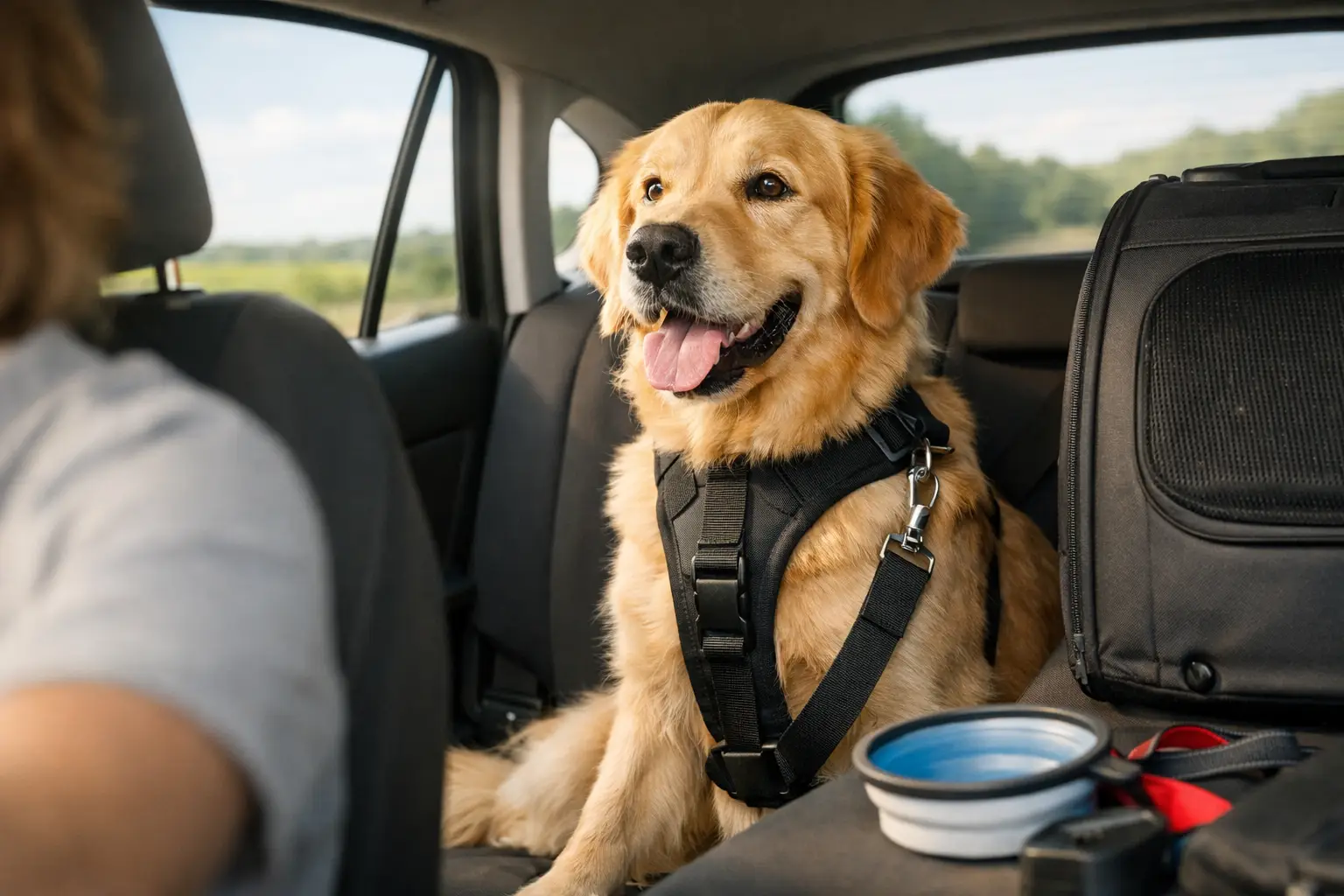
A happy dog leaning into the breeze can make a car ride feel like part of the adventure. But before the first mile, safety needs to come first. These dog car travel safety tips help you protect your companion from sudden stops, heat, stress, and the small surprises that can turn an easy drive into a difficult one.
The goal is not to make every ride rigid or complicated. It is to create a setup your dog understands and can rely on, whether you are heading to the vet, visiting family, or taking the long way to a new trail.
1. Secure your dog for every drive
An unrestrained dog can become a serious hazard in a collision or even during a sharp stop. They can be thrown forward, distract the driver, or try to climb into the front seat at the wrong moment. Holding a dog in your lap is not a safe alternative, even for small dogs.
Choose a travel restraint that suits your dog's size, build, and comfort level. A well-fitted car safety harness attached to the vehicle's seat belt can work well for many dogs. A secured crate is another strong option, particularly for dogs that already see their crate as a calm, familiar place. The crate should be large enough for your dog to stand, turn around, and lie down naturally, but not so large that they slide around during turns.
A seat cover or barrier can keep a dog contained in the back seat, but it is not the same as crash protection. Think of it as a tool for cleanliness and boundaries, not a substitute for a restraint.
2. Keep your dog in the back seat
The back seat is generally the safest place for a traveling dog. Front-seat airbags deploy with significant force and can seriously injure a dog, especially a small one. Even a calm dog can be at risk if they shift position just as an airbag deploys.
For the same reason, never allow your dog to ride loose in the cargo area of an SUV unless they are properly secured. And dogs should never travel in an open pickup truck bed. A sudden maneuver, flying debris, hot surfaces, or an attempt to jump out can have devastating consequences.
3. Practice before the big trip
A cross-country drive should not be your dog's first experience with a harness, crate, or car restraint. Start in the driveway. Let them investigate the setup, offer a treat, and allow a few quiet minutes inside the vehicle with the engine off.
Then build up gradually with short drives around the block. End somewhere positive, such as a familiar walking spot or a quiet park, rather than always arriving at the vet or groomer. This helps your dog learn that the car is predictable and safe.
Some dogs settle quickly. Others need several short sessions before they feel comfortable. That is not a failure. It is useful information that helps you plan a kinder, more realistic trip.
4. Manage temperature, not just the thermostat
Cars heat up quickly, even on mild days and even with a window cracked. Leaving a dog alone in a parked vehicle can become dangerous within minutes. If you need to stop somewhere your dog cannot safely enter, choose a drive-through option, bring another adult who can stay with them, or adjust the plan.
During the drive, pay attention to where the sun lands. A dog riding near a sunny window may get uncomfortably warm even when the cabin feels fine to you. Use window shades when needed, provide airflow, and keep fresh water accessible at breaks.
Cold weather deserves attention, too. Small, short-haired, senior, and very young dogs may need extra warmth. A familiar blanket can provide comfort, but make sure it does not interfere with the harness or crate door.
5. Plan breaks around your dog, not just the map
For many adult dogs, a stop every two to three hours is a reasonable starting point. Puppies, senior dogs, and dogs with medical needs may need more frequent breaks. A rest stop is more than a bathroom break. It is a chance to offer water, stretch, sniff, and reset before the next stretch of road.
Always leash your dog before opening the car door. New places can be noisy, crowded, and full of unfamiliar smells. Even a dependable dog may bolt if startled by a truck, another animal, or a sudden sound.
Choose quieter areas when possible, stay aware of hot pavement, and give your dog a few unhurried minutes. A rushed stop can leave an anxious dog more wound up than refreshed.
6. Pack a car-ready dog travel kit
You do not need to bring your entire home, but a few familiar essentials make a meaningful difference. Keep them within reach rather than buried under luggage. Your kit should include:
- A leash, harness, and backup collar
- Fresh water and a travel bowl
- Waste bags, paper towels, and pet-safe cleaning supplies
- Food and any needed medications
- A familiar blanket, chew, or comfort item
- Vaccination records and your veterinarian's contact information
For longer trips, bring more food than you expect to need. Delays happen, and changing your dog's food suddenly can cause digestive upset at exactly the wrong time.
7. Help prevent motion sickness and anxiety
Drooling, lip licking, whining, repeated yawning, vomiting, or restlessness can signal motion sickness or travel anxiety. Do not assume your dog will simply grow out of it on a long drive. A few practice trips may help, but persistent symptoms are worth discussing with your veterinarian before departure.
Your veterinarian can help identify whether the issue is nausea, fear, or a combination of both. They may recommend training strategies, feeding adjustments, or medication appropriate for your dog. Avoid giving human medications or sedatives unless your veterinarian specifically directs you to do so.
Many dogs travel more comfortably after a light meal several hours before leaving rather than a large meal immediately before the drive. This depends on the dog, so test your routine on shorter outings first.
8. Check identification before you leave
Travel increases the chance of separation. A door opens at a gas station, a leash slips during a stop, or a dog gets startled in an unfamiliar parking lot. Current identification gives you a better chance of being reunited quickly.
Confirm that your dog's collar tag has a current phone number. Make sure microchip registration details are correct, too. Carry a recent photo of your dog on your phone, ideally one that clearly shows their markings. It is a small step that can matter greatly in a stressful moment.
9. Avoid distractions from the driver's seat
Your dog may be family, but the driver still needs full attention on the road. Do not reach back to hand out treats, let your dog climb between seats, or respond to every whine while moving. Set up their space before you leave, then pull over safely if they need help.
If your dog becomes distressed, do not push through for the sake of keeping to a schedule. Find a safe place to stop, assess what is happening, and decide whether a break, a calmer route, or a change of plans is needed. Traveling together with confidence sometimes means knowing when to slow down.
10. Build in a gentle arrival
The drive is only one part of the journey. When you arrive, leash your dog before opening the door and take them for a short decompression walk before introducing a new hotel room, rental home, or family gathering. Offer water, a bathroom break, and a quiet spot with their familiar bedding.
Watch for signs that your dog needs space. A busy arrival, unfamiliar people, and a new environment can be a lot after hours in the car. Let them explore at their own pace, and keep their routine as familiar as possible that first evening.
A safe car ride is built from small decisions made before and during the trip. With a secure setup, thoughtful stops, and a plan that respects your dog's needs, the road can feel less uncertain and more like shared time well spent. 360Pet is here to help make every journey feel more prepared, more inclusive, and more connected.