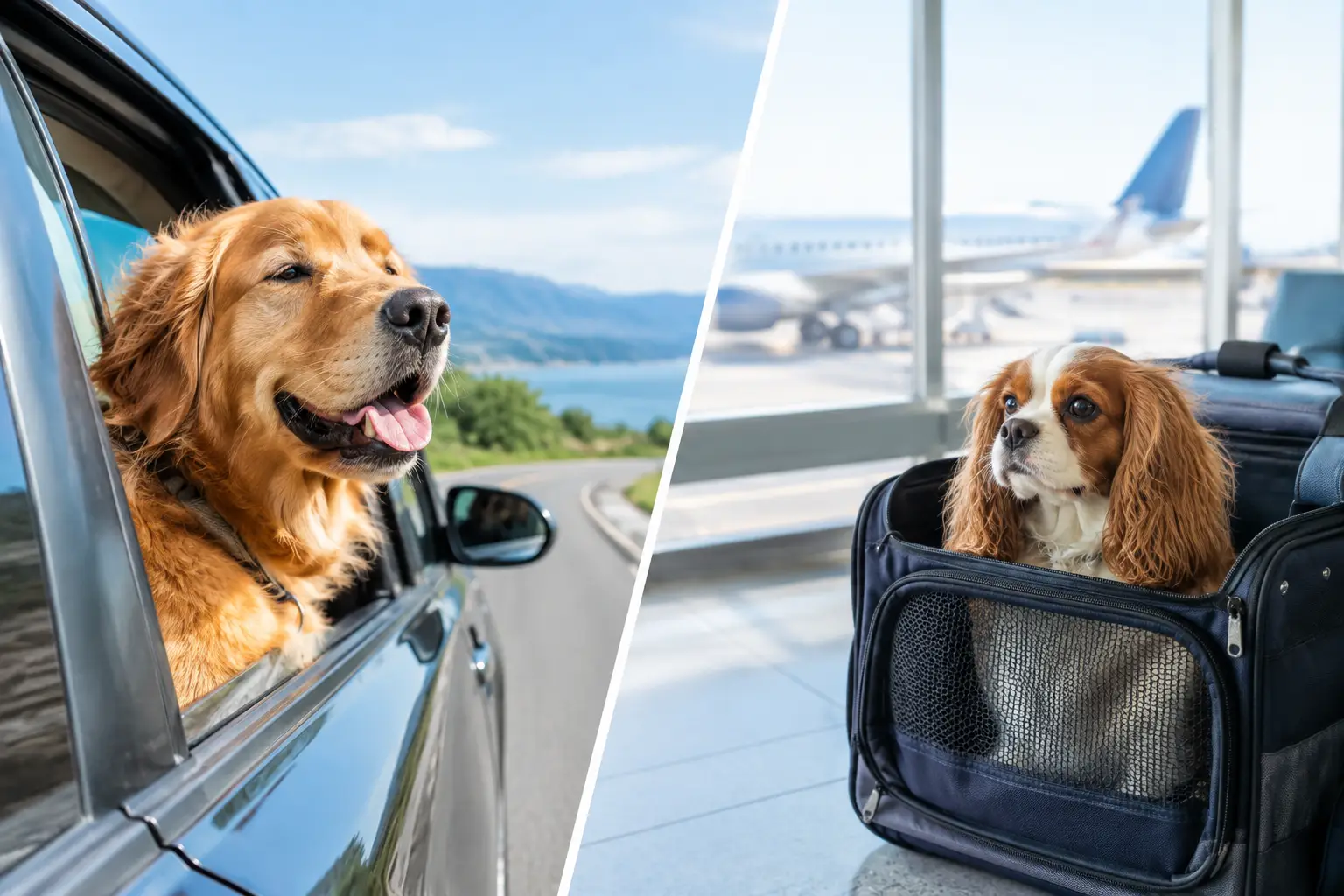
A two-hour flight can become a full day of travel once you add airport arrival times, security, layovers, baggage claim, and the drive on either end. That is why driving versus flying with pets is rarely just a question of miles. It is a decision about your pet’s comfort, health, temperament, and the kind of support they will need from you along the way.
For some pets, a familiar car, regular breaks, and your steady presence make a road trip the clear choice. For others, especially on a long cross-country move or a time-sensitive visit, flying may be the kinder and more practical option. The best plan is the one that helps your pet arrive safe, settled, and ready to share the experience with you.
Driving versus flying with pets: Start with your pet
Before comparing prices or schedules, consider how your pet handles change. A confident dog who enjoys car rides may adapt well to a multi-day drive. A cat who becomes distressed during even a short trip to the veterinarian may find long hours on the road difficult, even when you make frequent stops.
Age and health matter, too. Senior pets, very young pets, flat-faced breeds, and animals with heart, breathing, or mobility concerns may need additional veterinary guidance before either kind of trip. A pre-travel checkup is especially valuable if your pet takes medication, has a history of motion sickness, or has never traveled far from home.
Think about their daily needs in practical terms. Can they rest in a carrier or harness safely? Do they need a predictable feeding schedule? Are they comfortable around unfamiliar people, sounds, and spaces? Your pet does not need to love every part of the journey. They do need a travel plan that keeps stress manageable and gives them appropriate care throughout it.
When driving is the better choice
Driving gives you something air travel cannot: control. You choose the departure time, build in breaks, adjust the temperature, and change course if your pet is uncomfortable. For many families, that flexibility creates a calmer experience from the first mile to the final stop.
A road trip is often a strong fit when the destination is within a day or two of driving, your pet already tolerates the car, and you can make the trip at their pace. It is also useful when you are bringing more than one pet or traveling with larger dogs that would not qualify for in-cabin airline travel.
The comfort advantage of a familiar space
Your vehicle can feel more predictable than an airport. Bring a secured carrier or crash-tested travel crate, a pet seat belt or harness if appropriate, familiar bedding, water, food, waste bags, and any medications. Keep these essentials within reach rather than packed under luggage.
Plan breaks around your pet, not just the fuel gauge. Most dogs benefit from chances to stretch, drink, and relieve themselves every few hours. Cats may prefer to remain safely inside a carrier during stops, with a quiet, secure setup offered at longer intervals. Never open a carrier outside unless you are in a fully enclosed, controlled space. A frightened pet can disappear in seconds.
Driving also makes overnight stays possible when a single long day would be too demanding. Confirm that lodging welcomes your specific pet type, size, and number of animals before you arrive. A property described as pet-friendly may still have breed restrictions, fees, or limited pet-access areas.
The trade-offs of the road
More control does not automatically mean less stress. Long drives can be tiring for both people and pets, especially in heavy traffic, extreme heat, or winter weather. A pet should never be left alone in a parked vehicle, even briefly. Interior temperatures can become dangerous much faster than many travelers expect.
There is also the reality of distance. A 1,500-mile drive can mean several days in unfamiliar places, disrupted routines, and repeated transitions. If your pet gets carsick, vocalizes continuously, or becomes anxious in the vehicle, adding more hours may not be the compassionate choice. Practice with short drives before committing to a longer route.
When flying is the better choice
Flying can reduce the total travel burden for a long-distance journey. This is particularly true for relocations, family emergencies, or trips where driving would require several exhausting days. A shorter travel window may be easier on a pet than an extended road trip, provided they are healthy enough to fly and the airline’s policies suit their needs.
For eligible small dogs and cats, in-cabin travel usually offers the greatest peace of mind because your pet remains with you. Airlines set their own requirements for carrier dimensions, pet fees, documentation, and the number of pets allowed per flight. These details can change, so verify them directly before booking and again before departure.
What airport travel asks of pets
Airports are busy, loud, and unfamiliar. Your pet may encounter rolling bags, announcements, crowds, security procedures, and long stretches inside a carrier. Arrive early enough to move without rushing, but avoid spending unnecessary hours in the terminal.
Your pet’s carrier should be airline-compliant, well ventilated, secure, and large enough for them to stand, turn around, and lie down comfortably. Help them build a positive association with it at home well before travel day. Offer meals, treats, and quiet rest time in the carrier so it feels like a safe place rather than a signal that something stressful is about to happen.
At security, you may need to remove your pet from the carrier while the carrier is screened. Use a secure harness and leash for dogs. For cats and other small animals, ask staff about the safest screening approach if you are concerned they could escape. Calm preparation is far better than trying to solve this in a crowded checkpoint.
Cargo travel requires extra care
Some pets must travel in the aircraft’s cargo hold due to their size or airline rules. This option deserves careful consideration. Temperature restrictions, aircraft type, weather conditions, transfer routes, and breed limitations can all affect whether cargo travel is available and appropriate.
If cargo is your only option, speak with your veterinarian and the airline well in advance. Whenever possible, choose a direct flight, avoid periods of extreme heat or cold, and understand exactly where and when your pet will be checked in and collected. Do not assume every route or season is suitable. If the conditions do not support safe travel, a road trip or different travel arrangement may be the better answer.
Compare the full journey, not the ticket price
Flights can look expensive because pet fees, carriers, health documentation, and transportation to the airport add up quickly. Driving brings its own costs: fuel, extra hotel nights, parking, meals on the road, and potentially pet fees at each stop. The least expensive option is not always the least demanding one.
Time deserves equal weight. A nonstop flight may take a few hours, but include the door-to-door timeline when deciding whether it truly saves your pet stress. A six-hour drive may be simpler than flying if the airport is far away or the flight has a connection. On the other hand, a three-day drive may place more strain on a pet than a carefully planned direct flight.
Also consider the destination. Will your pet have a quiet place to decompress when you arrive? Is there reliable access to food, medication, veterinary care, safe walking areas, or a place for a litter box? A thoughtful arrival plan can matter as much as the transportation choice.
Prepare for either option with a pet-first plan
Whether you drive or fly, preparation creates confidence. Update identification tags and make sure your pet’s microchip registration has your current phone number. Pack a recent photo of your pet, vaccination records, medications, familiar food, a collapsible water bowl, cleaning supplies, and comfort items.
Avoid making major changes to food or routines just before departure. Feed a light meal at a time that works for your pet and your veterinarian’s advice, and keep water available. Do not sedate your pet unless a veterinarian specifically recommends it. Sedation can create risks during travel and may be prohibited by airlines.
It also helps to plan for the unexpected. Save emergency veterinary contacts near your route or destination, and know the rules that apply where you are going. 360Pet can help keep the details organized, so you can spend less energy searching for answers and more energy staying present with your companion.
The right way to travel is not the fastest route or the most familiar one. It is the route that respects your pet’s needs and gives you both room to arrive together with confidence.