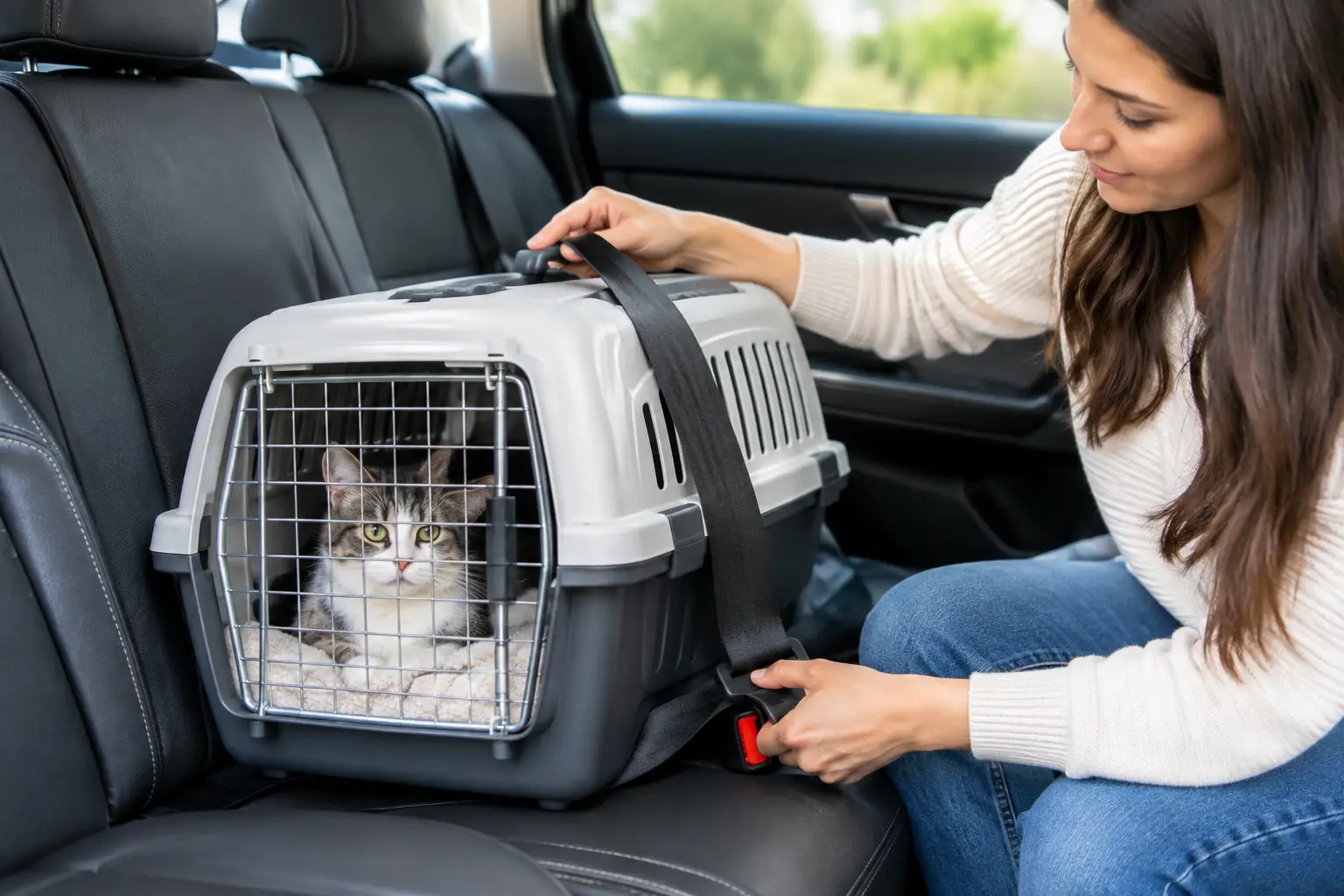
A carrier sliding across the seat at the first sharp turn can turn a calm drive into a frightening experience for your cat. Learning how to secure a cat carrier protects them from sudden movement, reduces distractions for the driver, and gives everyone a steadier start to the trip.
The goal is not simply to keep the carrier from tipping over. It is to create a stable, well-ventilated space where your cat can ride without being jostled, exposed to airbags, or able to escape inside the vehicle. A few thoughtful decisions before you leave can make car travel feel far more manageable.
Choose a carrier that can be secured safely
Start with a carrier that fits both your cat and your vehicle. Your cat should be able to stand, turn around, and lie down comfortably, but an oversized carrier can shift more easily and leave them sliding during turns. For most car trips, a structured hard-sided carrier or a sturdy soft-sided carrier with a reinforced base works well.
Before relying on a seat belt, check the carrier's instructions. Some models have dedicated belt guides, loops, or straps designed to hold the carrier in place. Others are intended only for carrying by hand and may not be safe to secure with a belt. Never force a seat belt through mesh panels, ventilation openings, or handles that were not made to bear that kind of pressure.
A hard-sided carrier can offer more protection in a bump or sudden stop, while a quality soft-sided carrier may be easier to fit in a smaller car and more comfortable for a cat who prefers a cozier space. The right choice depends on your cat, the length of the trip, and the carrier's ability to stay firmly positioned.
How to secure a cat carrier in the car
For many vehicles, the back seat is the best place for a cat carrier. It keeps your cat away from the front airbags and prevents the carrier from becoming a distraction beside the driver. Set the carrier flat on the seat, with its most stable side down, and position it so the door faces toward the side of the car rather than the open cabin when possible.
If the carrier has approved belt guides, thread the seat belt through them and buckle it securely. Pull the belt snug enough that the carrier cannot slide or tip, without compressing the carrier or blocking airflow. Give it a firm, gentle shake before your cat gets inside. It should stay in place when you push it from the sides and front.
If your car has a locking seat belt function, engage it after buckling. In many vehicles, you can do this by pulling the shoulder belt all the way out and then allowing it to retract. Check your vehicle manual if you are unsure. A locked belt can help prevent extra slack from feeding through during travel.
Do not place the carrier on the front passenger seat, even for a short ride. Airbags can deploy with significant force. Avoid holding the carrier on your lap, wedging it on the floor where it may shift under pedals, or relying on a loose blanket, bungee cord, or luggage strap. These setups may seem convenient, but they are not reliable in a sudden stop.
What about the cargo area?
The cargo area of an SUV, wagon, or hatchback may work if it is enclosed, well ventilated, and has a flat surface with proper tie-down points. However, it is not automatically safer than the back seat. The carrier must still be secured according to its manufacturer guidance, and your cat should not be exposed to loose luggage or direct sun through the rear window.
For sedans, the trunk is never an appropriate place for a cat. It is isolated, poorly ventilated, and inaccessible while you drive.
Prepare the carrier before your cat goes inside
A secure carrier should also be comfortable. Line the bottom with a familiar towel, small blanket, or carrier pad that will not bunch up under your cat's feet. For longer trips, place an absorbent pad beneath the bedding in case of an accident. Keep the interior simple. Loose toys, bulky bowls, and unsecured objects can roll around and add stress.
Make sure the door latches fully every time. Test them at home, especially if the carrier has a zipper closure or a top-opening panel. Some determined cats learn to push at weak zippers or doors when they are anxious. If your cat wears a collar, use a breakaway style, and make sure their microchip details and identification information are current.
A light carrier cover can help some cats feel protected from visual stimulation, but it should never block ventilation. Cover only part of the carrier, and remove or adjust it if your cat seems warm, restless, or unable to see you comfortably.
Help your cat accept the carrier before travel day
The best way to secure a cat carrier is to avoid a last-minute struggle with a frightened cat. Leave the carrier open at home several days or weeks before the trip. Add familiar bedding, offer treats nearby, and let your cat choose to investigate it. This turns the carrier from a signal that something scary is happening into a normal part of their environment.
When your cat is comfortable entering on their own, practice closing the door briefly. Then lift the carrier, walk around the house, and take a few short drives. Keep the first sessions brief and calm. Your cat does not need to love car travel immediately. They simply need repeated evidence that the carrier is safe and that you return home.
If your cat shows intense distress, such as persistent panting, drooling, vomiting, or frantic attempts to escape, speak with your veterinarian before a longer journey. They can help you rule out motion sickness or health concerns and discuss options that fit your cat's needs. Do not use sedatives or calming products without professional guidance.
Check the setup at every stop
Once you are driving, keep the carrier closed. Even a cat who seems calm can panic at an unfamiliar sound, a passing truck, or an open car door. Never let your cat roam freely in the car. They could slip beneath a seat, interfere with the driver, or escape when you stop.
At rest stops, check that the carrier remains level, buckled, and cool. Offer water during longer breaks if your cat will accept it, but do not open the carrier outside unless you are inside a fully enclosed, secure space. A parking lot is not a safe place to test your cat's recall.
Temperature matters as much as restraint. Do not leave your cat alone in a parked car, even for a quick errand. Cabin temperatures can change rapidly, and the carrier can become hot or cold long before it feels uncomfortable to you.
Plan for the trip, not just the drive
A secured carrier is one part of confident pet travel. Before leaving, confirm that your accommodations welcome cats, pack medications and veterinary records if needed, and know where you can access care along the route. For air travel, follow the airline's current carrier dimensions and in-cabin rules rather than assuming a car setup will meet flight requirements.
360Pet can help keep the larger pet-travel plan organized, so the details around your route, destination, and cat's needs do not get lost in the rush of departure.
Your cat may not understand why the road is moving beneath them, but they will recognize the comfort of a familiar scent, a steady carrier, and your calm presence nearby. Give them that secure place to ride, and the journey can begin with more peace of mind for both of you.