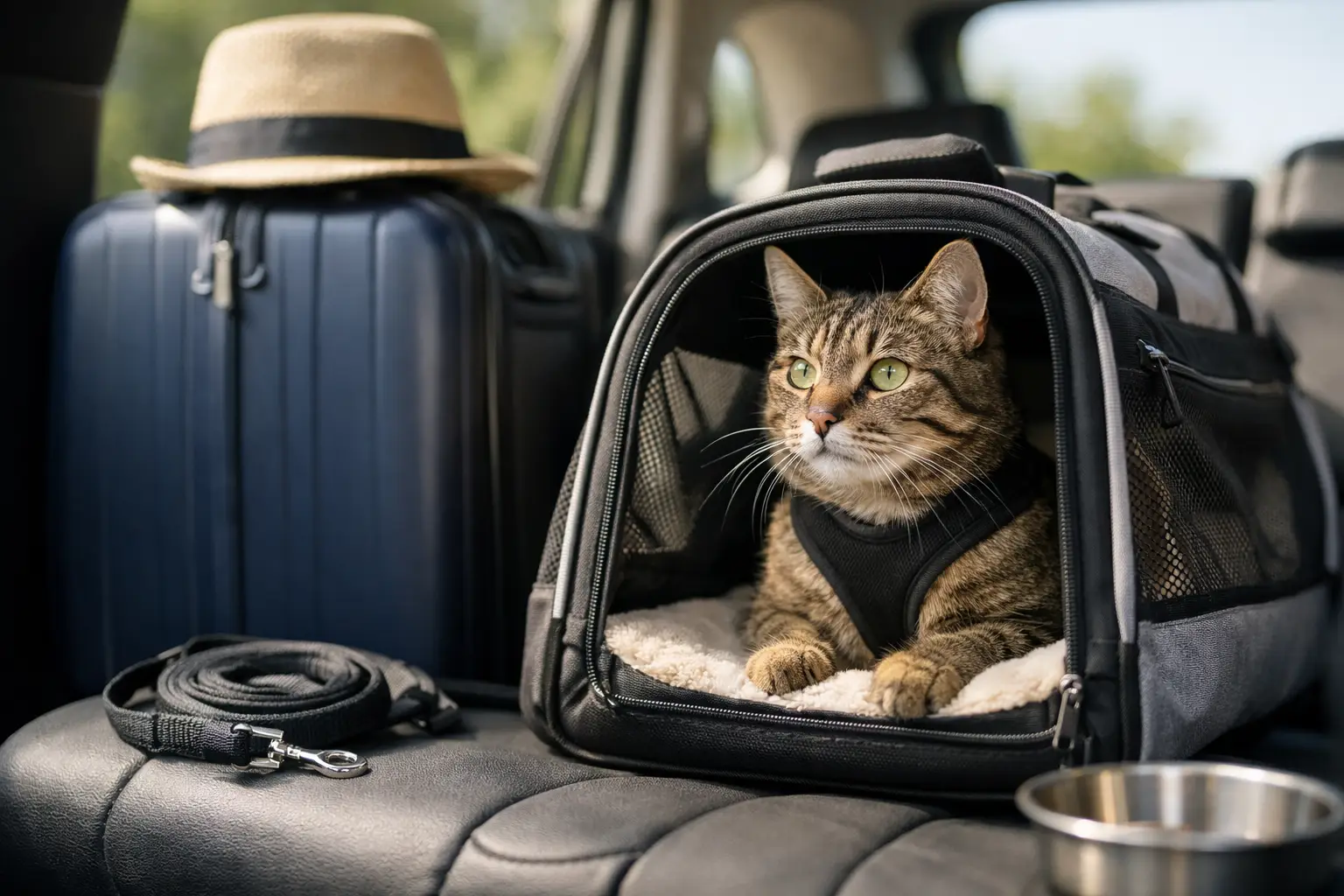
A cat who disappears under the bed when the suitcase comes out is not being difficult. They are telling you that change feels risky. Learning how to travel with cats starts with respecting that message, then giving your cat enough preparation, predictability, and protection to feel secure beside you.
Cats can travel well, but they are not small dogs. Many prefer familiar territory and routines, which means a successful trip is less about getting from point A to point B quickly and more about reducing surprises along the way. With a thoughtful plan, you can make room for the journey you want to share while keeping your cat’s comfort at the center.
Start by deciding whether this trip is right for your cat
Not every cat will enjoy every kind of travel. A confident, curious cat may adapt well to a weekend road trip after some practice. An older cat, a cat with a medical condition, or one who becomes highly distressed outside the home may be happier with trusted care at home for a short vacation.
That is not a failure. Pet-first travel means making the decision that supports your individual cat, not forcing an experience because you want them included. Consider the length of the trip, the number of location changes, the expected noise level, and whether you can give your cat a quiet, secure space at your destination.
Before a longer trip, talk with your veterinarian. They can assess your cat’s health, discuss motion sickness or anxiety, confirm which medications are appropriate, and help you understand any destination-specific health considerations. Never give a sedative or new calming product for the first time on travel day. Cats can respond unpredictably, especially when stressed.
Build comfort with the carrier before you leave
The carrier is your cat’s safe place during travel, not a last-minute container that appears before a vet visit. Begin carrier training at least a few weeks before departure, and longer if your cat is especially wary.
Leave the carrier open in a familiar room with a soft blanket that smells like home. Add treats, toys, or occasional meals near it, then just inside it. Let your cat choose to explore. Once they are comfortable resting inside, briefly close the door, reward calm behavior, and gradually increase the time.
Choose a sturdy carrier that gives your cat enough room to stand, turn around, and lie down naturally. A hard-sided carrier can offer more protection in the car, while a soft-sided option may be required for flying under an airline seat. Whichever you use, make sure the zippers, latches, and seams are secure. A frightened cat can find an escape route faster than most owners expect.
Line the carrier with an absorbent pad and a familiar blanket. Bring a spare liner in case of an accident. If your cat has a favorite small toy, it can help, but avoid anything with loose pieces that could become a hazard in transit.
Practice short rides before a long drive
For road trips, build up slowly. Start by placing your cat in the carrier and sitting together in the parked car for a few minutes. Then try a short drive around the block, followed by a longer ride. End each practice session at home, where your cat can return to their normal routine.
During the actual drive, keep your cat secured in their carrier. A loose cat can crawl near pedals, distract the driver, or bolt through an open door at a gas stop. Secure the carrier with a seat belt where possible, keep the car at a comfortable temperature, and avoid loud music.
Most cats do best when the car remains calm and consistent. Covering part of the carrier with a light, breathable cloth may reduce visual stimulation for some cats, but do not block airflow or use a cover if it makes your cat more upset. Check in at regular intervals by listening and observing rather than opening the carrier.
For a full travel day, offer water during planned stops and give your cat access to a small travel litter box in a secure, enclosed space if needed. Some cats will not eat, drink, or use the litter box while the vehicle is moving. That can be normal for a short journey, but prolonged refusal to drink, repeated vomiting, heavy panting, or extreme lethargy calls for veterinary guidance.
How to travel with cats by air
Flying can be a good option when driving is impractical, but it requires extra planning. Airline rules vary by carrier, route, aircraft, and season. Confirm pet reservations, carrier dimensions, fees, check-in requirements, and health documentation directly with your airline well before booking.
When possible, keep your cat with you in the cabin in an airline-approved carrier that fits beneath the seat. Cargo travel adds temperature, handling, and separation concerns, so discuss the risks carefully with your veterinarian and airline before choosing that option. Direct flights are generally easier on cats than itineraries with connections.
Airport security deserves a plan of its own. You may be required to remove your cat from the carrier while the carrier goes through screening. Ask for a private screening room if available. Put a secure harness and leash on your cat before entering the terminal, but remember that a frightened cat can slip even a well-fitted harness. Keep a firm hold and avoid opening the carrier in crowded public areas.
Pack copies of vaccination records, identification details, your veterinarian’s contact information, and any required health certificate. Keep these documents in your carry-on, not checked luggage. A recent photo of your cat is also useful if you become separated.
Make the destination feel familiar
A pet-friendly booking is only the first step. Check the property’s specific cat policy before arrival, including pet fees, limits, areas where pets are not allowed, and whether cats may be left unattended. Hotels, rentals, and campgrounds can have very different rules.
When you arrive, do not let your cat explore immediately. First, inspect the room for open vents, gaps behind appliances, toxic plants, loose screens, accessible cleaning products, and doors that do not latch securely. Close windows and exterior doors, then set up one quiet room or corner with the carrier, litter box, food, water, bedding, and a hiding place.
Give your cat time to settle at their own pace. Some will walk out confidently within minutes. Others may stay in the carrier or under a bed for hours. Avoid pulling them out or inviting unfamiliar people to meet them right away. Familiar scents and routine matter more than sightseeing on the first day.
Keep feeding times, litter habits, and play sessions as close to normal as possible. If you plan to leave the room, place the Do Not Disturb sign on the door and make sure housekeeping will not enter. Even a friendly cat can panic when strangers enter an unfamiliar space.
Prepare for the moments you cannot predict
Good pet travel planning is not about expecting something to go wrong. It is about knowing what you will do if it does. Update your cat’s microchip information before departure and make sure their collar has an ID tag with your current phone number. A breakaway collar is usually the safest choice for cats, but it should never replace a microchip.
Bring enough of your cat’s regular food, litter, medications, and supplies for the trip, plus extra for delays. Sudden food changes can create stomach upset at exactly the time your cat needs consistency. Locate an emergency veterinarian near your destination before you need one, and save the number in your phone.
If your cat escapes, resist the urge to chase. Get low, speak softly, place the carrier or familiar bedding nearby, and ask others to reduce noise and movement. Cats often hide close to where they escaped, especially in unfamiliar environments.
The goal is not to turn your cat into an effortless traveler overnight. It is to create a journey where they feel protected, understood, and included. With steady preparation and a plan built around their needs, each small trip can become proof that you can travel together with confidence.