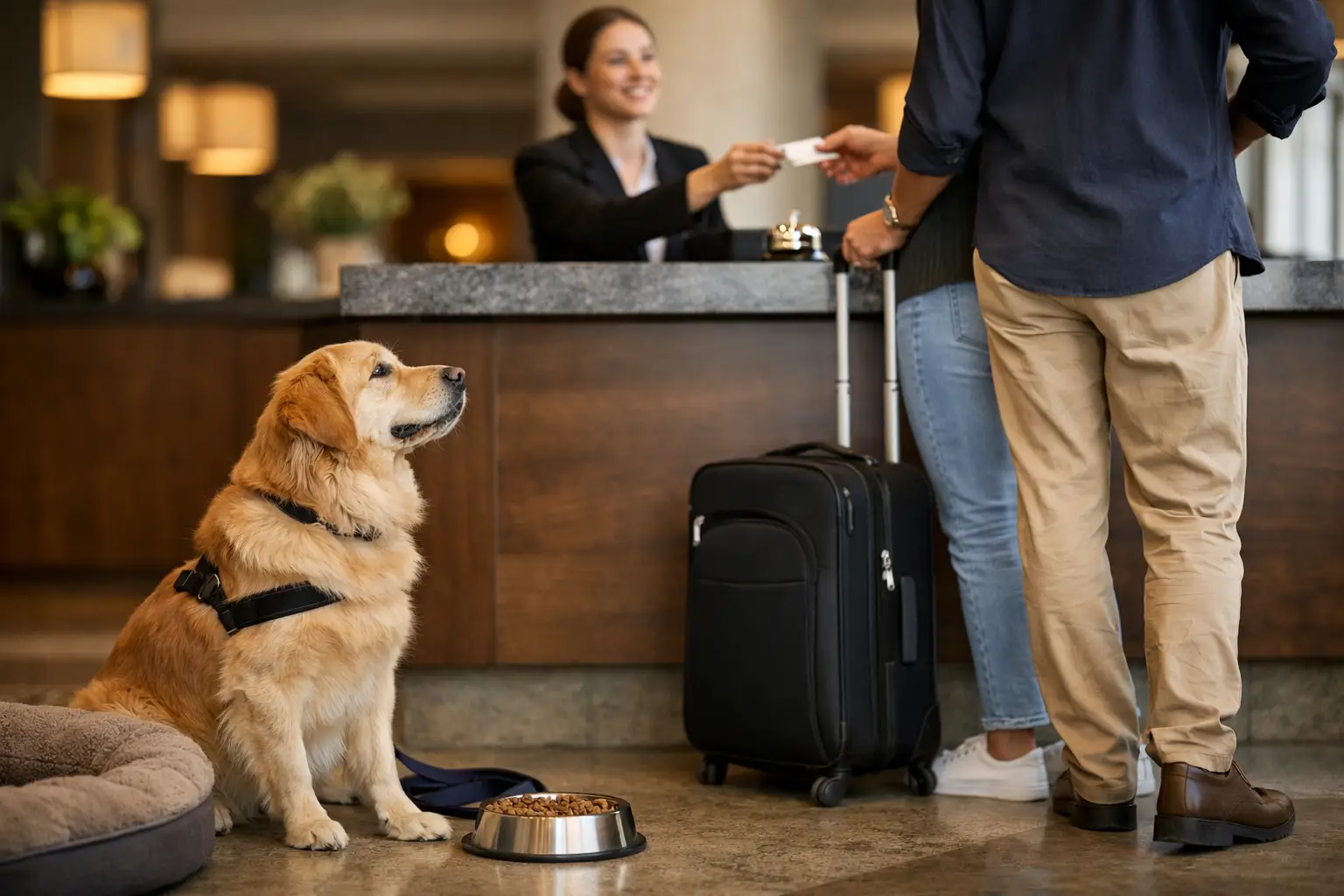
A hotel can welcome pets and still be the wrong place for your pet. Pet friendly hotel pet policies often look simple in a booking filter, but the details can shape whether your dog or cat feels settled, whether you face surprise charges, and whether your trip begins calmly or with an avoidable problem at check-in.
The best stay starts before you reserve a room. Rather than asking only, “Do you allow pets?” ask what the property expects from them, what it provides for them, and whether those expectations fit your animal’s needs. A small amount of planning protects your budget, your pet’s comfort, and the experience of everyone sharing the hotel.
Pet Friendly Hotel Pet Policies Are Not All the Same
“Pet friendly” has no single standard. One hotel may allow two dogs of any size for a nightly fee, while another permits one pet under 25 pounds and charges a nonrefundable cleaning deposit. Some properties welcome cats; others use “pet” but mean dogs only. A few may accept pets in designated rooms, while others place pet guests only on certain floors or near exterior doors.
That variation matters because a policy is more than paperwork. It affects your room location, how often you need to take bathroom breaks, whether your pet can safely remain alone, and what happens if they bark when unfamiliar hallway sounds pass the door.
Brand-wide policies can also differ from a specific hotel’s rules. Franchised properties may have local limits based on room layout, municipal requirements, or owner preference. Always review the policy for the exact location and confirm it directly if anything is unclear.
Check Fees Before You Compare Room Rates
A low nightly room rate can become less appealing once pet fees are added. Hotels commonly use a nightly pet fee, a flat fee per stay, a refundable deposit, or a nonrefundable deposit. Some charge per pet. Others have a maximum total charge, which can make a longer stay more predictable.
Ask what the fee covers and whether there are additional damage charges. Normal pet presence should not be confused with actual damage, but hotels may charge for stains, scratches, excessive hair, odor, or flea treatment. Taking a few time-stamped photos when you arrive is a practical way to document the room’s condition before your pet settles in.
Be clear about cancellation rules, too. If your plans change, a hotel may refund the room but not the pet fee, or it may apply different timing requirements. That detail can matter when you are planning around weather, road conditions, or a pet who becomes unwell before departure.
Know the Rules That Affect Your Pet’s Comfort
Weight, breed, and species restrictions are common, even at hotels that advertise themselves as pet friendly. These rules are not a reflection of your pet’s character, but they can limit your choices. Do not assume an exception will be granted at the front desk. A denied check-in after a long drive is stressful for everyone.
Also ask about the number of pets allowed. Families traveling with two dogs, a dog and a cat, or a bonded pair of cats need confirmation that every animal is included in the reservation. Leaving one pet off the booking can create confusion and may violate the hotel’s policy.
The most useful questions are often about daily routines. Is your pet allowed in the lobby, elevator, patio, or breakfast area? Must dogs be leashed at all times outside the room? Is there a relief area on site, and is it safely lit at night? These details tell you more about the real experience than the pet-friendly label alone.
The unattended-pet rule deserves extra attention
Many hotels do not allow pets to be left alone in guest rooms. Others permit it only if the pet is crated, quiet, and the owner leaves a contact number with the front desk. Some ask owners to post a door hanger so staff know a pet is inside and can avoid entering unexpectedly.
This is one of the most important pet friendly hotel pet policies to understand before booking. If you plan to attend a wedding, spend hours at a museum, or have dinner somewhere pets are not welcome, you need a realistic care plan. Hoping your pet will be fine alone in a new room is not a plan, especially for animals prone to separation anxiety or vocalizing in unfamiliar places.
If your pet stays best near you, choose activities that include them or arrange reliable local care in advance. For many pets, a quieter itinerary is not a compromise. It is what makes the trip enjoyable.
Look Beyond the Room
A clean room matters, but the surrounding setup can matter just as much. A dog who needs frequent walks may do better at a ground-floor property with outdoor access than at a high-rise hotel, even if the latter has a larger room. A nervous cat may be calmer in a quiet room away from elevators, vending machines, and exterior doors.
When possible, request a room that supports your pet’s habits. Ground-floor rooms can simplify late-night walks, though they may have more passing foot traffic. Upper floors may be quieter but add elevator rides and longer trips outside. There is no universal best choice - it depends on your pet.
Consider the nearby environment as well. Find out whether there are safe walking routes, shaded areas in warm weather, and places to manage waste responsibly. If your dog is reactive around other animals, a busy hotel with a popular pet relief station may require more careful timing. If your pet is senior or recovering from an injury, distance from the parking area and stairs may be a deciding factor.
Prepare for Check-In Like a Responsible Guest
A smooth check-in gives your pet time to adjust instead of standing in a busy lobby surrounded by luggage, unfamiliar people, and new smells. Keep your pet leashed or securely crated, and have their vaccination records, identification, and reservation details easy to access if requested.
Once inside, do a quick room safety check. Look for dropped food, cleaning supplies left within reach, accessible cords, or gaps behind furniture where a small pet could hide. Set up a familiar blanket or bed, offer water, and give your pet a few quiet minutes before introducing the rest of the space.
Pack for the hotel stay, not just the drive. Food, medication, a leash, waste bags, a carrier or crate, cleaning supplies, and familiar bedding help maintain routine. Bringing your pet’s usual food is especially helpful, since a sudden diet change combined with travel stress can upset their stomach.
Good hotel etiquette also protects pet-inclusive travel for other families. Keep barking and hallway noise to a minimum, clean up promptly, never use hotel towels for pet cleanup, and respect every shared-space rule. If your pet is having a difficult time settling, respond early rather than waiting for a complaint. A walk, a chew, white noise, or a return to the room may be all they need.
Questions to Ask Before You Book
Before committing, get clear answers to these points:
- Which pets are allowed, including species, weight, breed, and number limits?
- What fees, deposits, and potential damage charges apply?
- Can a pet be left alone in the room, and under what conditions?
- Are there designated pet rooms, relief areas, or restrictions on shared spaces?
- What are the hotel’s rules for housekeeping when a pet is inside?
Write down the name of the staff member who confirms any unusual arrangement. It is not about being confrontational. It simply gives you a reliable record if the policy is misunderstood when you arrive.
A pet-friendly stay should give you more freedom, not leave you managing last-minute surprises. With thoughtful questions and a plan built around your pet’s temperament, hotel travel can feel less like a logistical gamble and more like what it should be: time away together, with confidence.