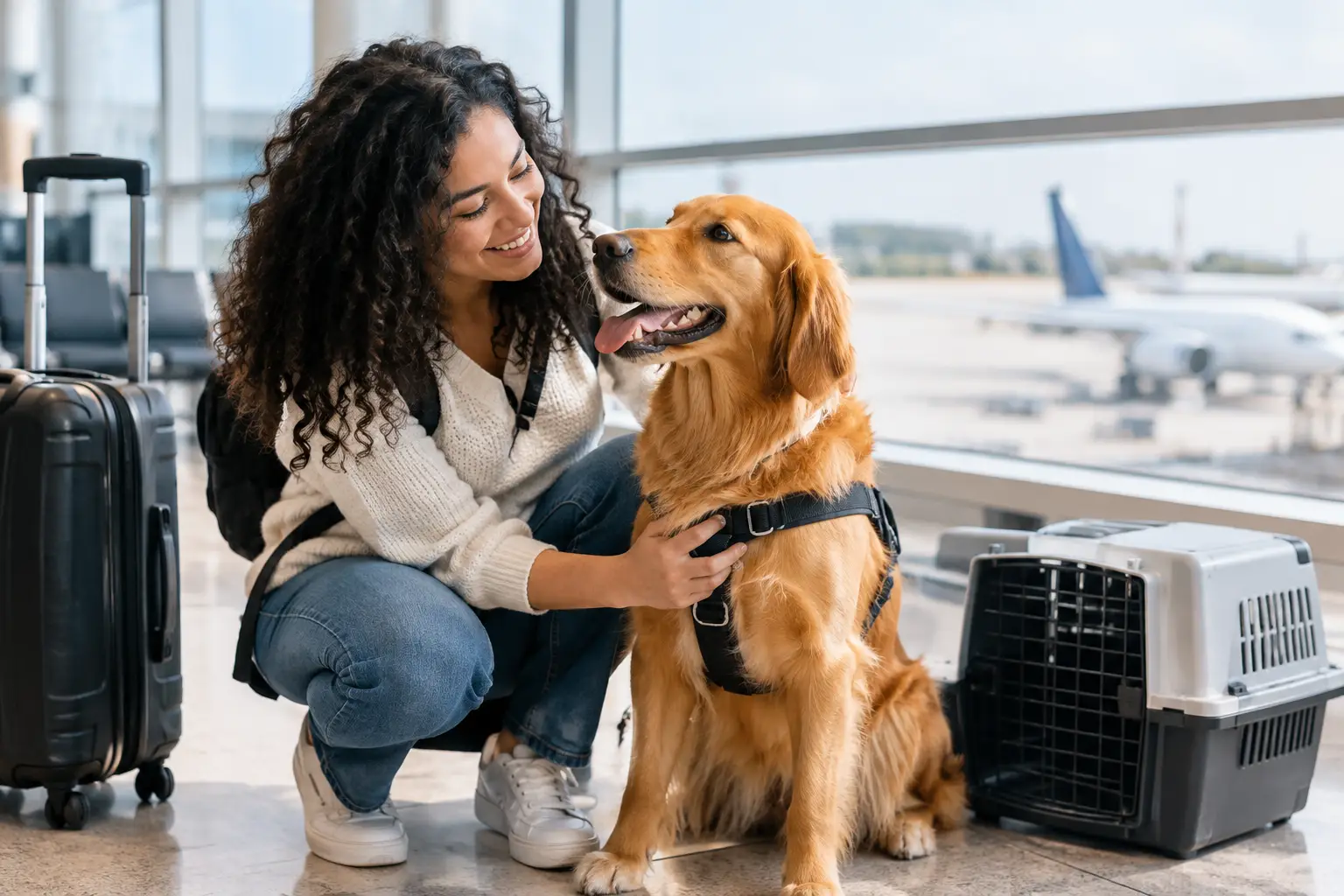
A weekend away can feel wonderfully simple until the reservation screen asks about your dog, carrier, weight, pet deposit, and cleaning fee. Pet travel fees are a normal part of bringing a companion along, but they should not be a last-minute surprise. With a little planning, you can build a realistic trip budget and focus more on the fun parts, like finding a trail your pup will happily sniff for an hour.
Why pet travel fees vary so much
There is no single pet-travel price. Costs depend on your mode of travel, your destination, your pet’s size, the length of your stay, and each business’s individual policy. A cat traveling in a carrier on a flight has different needs and fees than a large dog joining a family on a road trip. A downtown hotel may set a different policy than a vacation rental near the beach.
The key is to look past the word “pet-friendly.” It is a welcome sign, but it does not always mean pet stays are free. Some places charge a flat fee for the entire stay, while others charge nightly. Some collect a refundable deposit for potential damage, and others apply a nonrefundable cleaning fee. Knowing which one you are seeing makes a real difference when comparing options.
Before booking, write down every pet-related cost next to the base travel price. That small habit helps you compare the true total, not just the first number that catches your eye.
Common pet travel fees to expect
Air travel costs
For many pet parents, airline fees are the first expense that comes to mind. Pets flying in the cabin generally travel in an airline-approved carrier that fits beneath the seat in front of you. Airlines often charge a fee per flight segment or each direction of travel, so a connection can affect both your itinerary and your budget.
Fees and rules vary widely by carrier. Airlines may limit the number of pets allowed in the cabin, set carrier dimensions, restrict certain routes, or require you to add your pet to the reservation in advance. Do not assume a seat confirmation means your pet’s space is confirmed, too.
If your pet cannot travel in the cabin, the logistics can be more involved. Some airlines do not offer pet cargo services on every route or at every time of year. Rather than choosing a flight based on price alone, review the airline’s current pet policy directly before finalizing your plans. A slightly different departure time may be easier for your pet and less complicated for you.
Hotels and vacation rentals
Lodging policies can be the biggest swing in a pet trip budget. One hotel may welcome pets with no added charge, while another may add a nightly fee for each pet. Vacation rentals may charge a one-time pet fee, a cleaning fee, a refundable deposit, or a combination of these.
Read the policy beyond the headline. Check the maximum number of pets allowed, size or breed restrictions if listed, whether pets may be left unattended, and whether there are designated relief areas. A place that accepts your pet but does not fit your daily routine may not be the best value.
For example, a lower nightly rate can lose its appeal if the pet fee is substantial for a one-night stay. On the other hand, a flat fee may be more reasonable for a longer vacation. Do the math using your actual dates before deciding.
Car rentals, rides, and local transportation
Road trips can be more flexible, especially when you are traveling in your own vehicle. Still, pet-related costs can show up along the way. If you rent a car, ask about cleaning policies and whether there is an added charge for excessive hair, odor, or damage. A seat cover, carrier, or travel blanket can make cleanup easier and help protect the vehicle.
Rideshare and taxi rules may differ by driver, city, and service type. Some drivers welcome pets, while others may decline or expect a pet to be in a carrier. Public transportation also has its own rules, which can be especially relevant in busy areas such as New York City and nearby New Jersey communities. Check before you arrive at the station with a cheerful dog and nowhere to sit.
Local costs can include pet-friendly shuttle services, parking near pet-accessible parks, or a day pass for a beach or campground. None of these expenses is necessarily large on its own, but together they can change the shape of a weekend budget.
Campgrounds and outdoor stays
Campgrounds, RV parks, and cabins often welcome pets, but policies still vary. You may encounter a per-pet fee, a nightly charge, or rules limiting the number of animals at a site. Some parks require pets to remain leashed and may limit access to certain trails, beaches, or shared facilities.
Outdoor trips may also call for practical purchases, such as a long lead, portable water bowl, paw wipes, or a warmer sleeping layer. These are not booking fees, but they are part of the real cost of traveling comfortably together.
Build a pet travel budget that leaves room to breathe
A useful budget has two parts: known costs and a small cushion. Known costs include transportation, lodging fees, supplies you need to buy for the trip, and any paid pet activities you plan to enjoy. Your cushion is for the unexpected but ordinary moments, such as needing an extra bag of food, paying for parking at a better trailhead, or choosing a more convenient pet relief stop.
Keep your pet’s usual routine in mind. If your cat uses a specific litter or your dog eats a particular food, packing enough can prevent an inconvenient search in an unfamiliar area. Bring familiar items when possible, including a leash, collar with current identification, carrier or crate, bowls, bedding, waste bags, and comfort items. Replacing forgotten essentials on the road is rarely the budget-friendly option.
It also helps to separate refundable deposits from true expenses. A deposit may return to you if there is no damage, but it can still affect how much money is temporarily available during the trip. Treat it as part of your upfront budget, even if you expect to receive it back later.
How to reduce pet travel costs without cutting corners
Saving money does not have to mean choosing the least expensive option at every turn. It means choosing the option that works well for your pet and your plans.
Start by searching for lodging with transparent pet policies. A clear, upfront fee is easier to plan around than vague language that leads to surprises at check-in. If you are comparing stays, calculate the total cost for all nights, including fees and deposits, before choosing.
For flights, book early if you know your pet will be coming along. Cabin pet spaces can be limited, and waiting may leave you with fewer choices. Direct flights can also simplify the experience, though the best choice depends on your pet, route, schedule, and budget.
Road trippers can often save by planning pet breaks around free public spaces that welcome leashed animals. Pack snacks, water, and cleanup supplies rather than relying on impulse purchases at every stop. A well-stocked travel bag is one of the simplest ways to avoid paying convenience-store prices for something you already have at home.
Finally, call or message a property when a policy is unclear. Ask what the charge covers, whether it applies per pet or per stay, and whether any deposits are refundable. Getting answers before you book is far more relaxing than sorting it out with luggage in one hand and a carrier in the other.
A simple pre-booking check for pet travel fees
Before you click confirm, make sure you can answer four questions: What does my pet’s transportation cost? Is the lodging fee nightly, per stay, or refundable? Are there local transportation or activity rules that could add costs? What supplies should I pack so I do not need to replace them away from home?
Save policy screenshots, confirmation numbers, and key contact information in one easy-to-find place. Keeping travel details organized is particularly helpful when multiple family members are involved or when plans change mid-trip. Tools like 360Pet can support a more organized approach to pet-friendly planning, so the details do not have to live in a dozen browser tabs.
Traveling with a pet is not about making every expense disappear. It is about seeing the costs clearly, preparing with care, and choosing experiences that let every member of the household feel included. A little budget planning now can make room for the moments you will remember later: the window-seat nap, the new trail, and the happy reunion at the end of a long day.