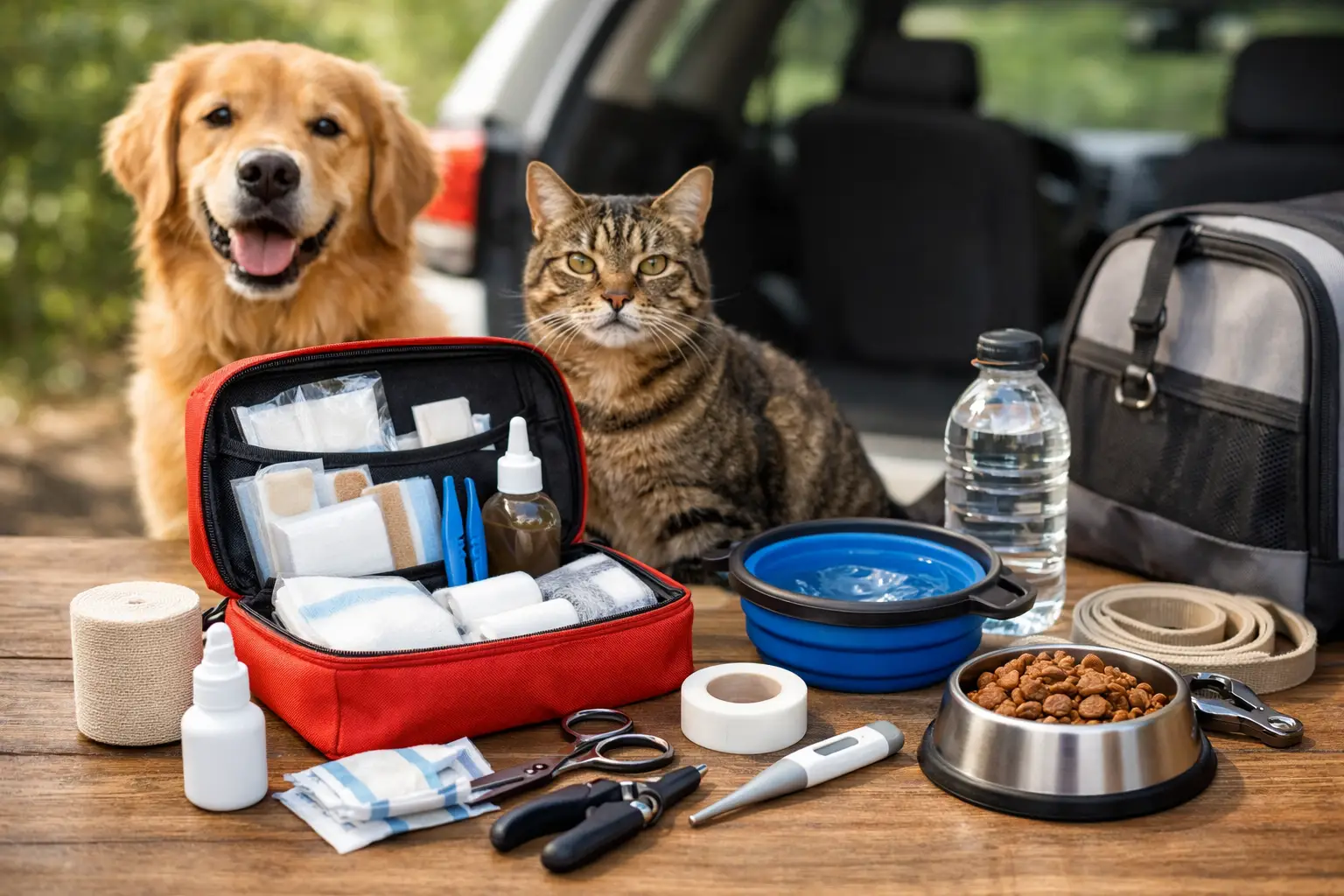
A scraped paw at a rest stop, an upset stomach in a hotel room, or a thorn picked up on a trail can turn a happy trip stressful fast. A well-prepared pet travel first aid kit gives you a practical way to handle minor problems while you contact a veterinarian or make it to care. It is not about expecting the worst. It is about giving your pet the same thoughtful preparation you give every other member of the family.
The best kit is small enough to bring every time, organized enough to use under pressure, and tailored to your pet rather than copied from a generic checklist. What a senior dog needs on a cross-country drive may differ from what a curious cat needs during a move or what an active puppy needs on a hiking weekend.
Start With Your Pet's Everyday Needs
Before adding bandages or tools, pack the items your pet may need simply to stay comfortable and stable. Bring enough prescription medication for the full trip, plus a little extra in case travel delays change your schedule. Keep medications in their original labeled containers, and store them away from heat and moisture.
If your pet has allergies, a chronic condition, motion sickness, anxiety, or a history of stomach upset, ask your veterinarian before departure what should be in your kit. Your vet may recommend a specific medication, dose, or treatment plan. Do not assume a human medication is safe for a pet. Common pain relievers, cold medicines, and topical products can be dangerous for dogs and cats, even in small amounts.
Include a written medication list with your pet's name, current prescriptions, dosage instructions, allergies, regular veterinarian, emergency clinic contact, and a recent photo. Save the same details on your phone, but keep a paper copy too. A low battery or poor signal should not leave you searching for essential information.
What to Put in a Pet Travel First Aid Kit
A soft-sided pouch or waterproof zip case works well for most trips. Choose one with compartments, or use labeled small bags inside so you can find what you need without emptying the whole kit on the car floor.
For common minor injuries and cleanup, include:
- Sterile gauze pads and a roll of gauze for applying gentle pressure to a small wound
- Self-adhering pet bandage wrap, used carefully so it is snug but never tight
- Saline wound wash or sterile saline for rinsing debris from a superficial cut or eye area
- Blunt-tip scissors, tweezers, disposable gloves, and a digital thermometer
- Antiseptic wipes approved for pets and a clean towel or absorbent pad
- A cold pack wrapped in cloth for minor swelling, along with a small flashlight for checking paws, ears, or fur
A few travel-specific supplies are just as useful. Pack extra poop bags, unscented pet-safe wipes, a collapsible bowl, bottled water, and a small supply of your pet's familiar food. Sudden food changes can create digestive trouble, especially when travel has already disrupted your pet's routine. For dogs, consider a spare leash and collar. For cats and smaller companion animals, bring backup carrier fasteners or zip ties only for securing damaged carrier hardware, never for restraining the animal.
An emergency blanket can help keep a chilled pet warm or create a clean surface when you need to assess an injury. A muzzle may be appropriate for some dogs, but only if your dog has been comfortably introduced to one in advance. Even a gentle pet may bite when frightened or in pain. Never muzzle a pet that is vomiting, struggling to breathe, overheated, or has facial trauma.
Keep It Useful, Not Overstuffed
There is a trade-off between being prepared and carrying a kit so large that it stays at home. For a weekend road trip, prioritize medication, wound-care basics, hydration supplies, and your pet's records. For a longer vacation, camping trip, or relocation, add replacements for items you may use up and enough regular medication to cover unexpected delays.
Your destination also matters. A beach trip may call for paw protection and extra fresh water. A mountain trip may make a tick-removal tool and an emergency blanket more relevant. If you are flying, keep essential medications and a compact version of your kit accessible rather than packing everything in checked luggage. Airline rules and carry-on restrictions can affect what you bring, so check them before you leave.
Avoid filling your kit with products you have never used or do not understand. A tool is only helpful if you know when it is appropriate. Your veterinarian can show you how to take your pet's temperature, clean a small wound, and apply a temporary bandage safely. That brief conversation can make the kit far more valuable than adding another item to it.
Know the Difference Between First Aid and Emergency Care
First aid is temporary support, not a replacement for veterinary care. You can rinse a minor scrape, apply pressure to a small bleeding wound, or keep your pet quiet and warm while you seek help. You should not try to diagnose a serious illness, remove a deeply embedded object, induce vomiting, or give medication without professional guidance.
Seek urgent veterinary care if your pet has trouble breathing, collapses, has a seizure, experiences repeated vomiting or diarrhea, shows signs of heatstroke, has uncontrolled bleeding, cannot walk normally, or may have eaten something toxic. Sudden bloating, a swollen abdomen, or repeated unproductive retching in a dog also requires immediate attention.
When you are unsure, call a veterinarian. It is always reasonable to ask whether your pet's symptoms can be monitored, need a same-day appointment, or require an emergency clinic. Staying calm helps your pet stay calmer too, and clear information helps a veterinary team guide you quickly.
Plan for Heat, Cars, and the Unexpected
Many travel emergencies are preventable. Never leave a pet unattended in a parked vehicle, even for a quick stop. Temperatures inside can rise dangerously fast, and cracking a window does not make it safe. Offer water regularly, schedule breaks, and watch for heavy panting, drooling, weakness, vomiting, confusion, or bright red gums.
Secure your pet during every drive with a properly fitted harness, travel crate, or carrier. A loose pet can be injured in a sudden stop and may escape after an accident. Keep your first aid kit where an adult can reach it easily, not buried under luggage in the trunk.
Before you leave, locate veterinary options near your destination and along a long driving route. 360Pet can help make pet travel details easier to organize, but it is still wise to know where you would go if your pet needed help after hours. Add clinic addresses and phone numbers to your travel plan before the trip begins.
Check Your Kit Before Every Trip
Set a reminder to review your kit at the start of each travel season and before any major journey. Replace expired saline, wipes, medications, and cold packs. Restock gauze, food, and water after use. Check that the thermometer battery works and that your contact sheet still reflects your current veterinarian and prescriptions.
If your pet is new to travel, let them sniff the kit and carrier at home. The goal is not to make first aid feel scary. Familiarity can reduce stress when you need to use an item away from home.
A pet travel first aid kit cannot prevent every surprise, but it can create a calmer next step when one happens. Pack it with care, keep it close, and let preparation make more room for the shared moments that brought you on the journey in the first place.