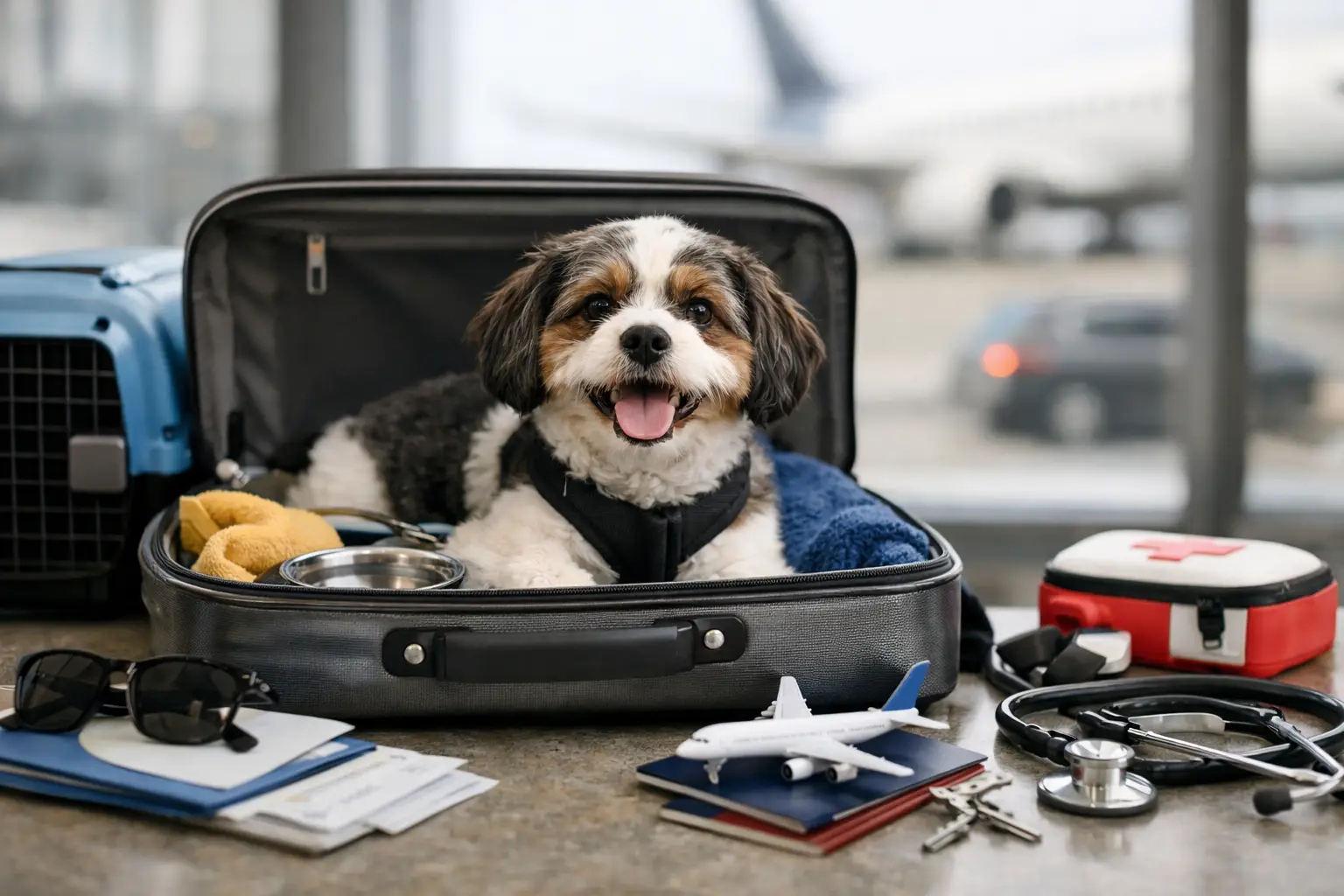
A sick pet on the morning of a long-planned trip can turn excitement into a hard decision: cancel, delay, find care away from home, or travel while worried. Pet travel insurance coverage may ease some of the financial pressure in those moments, but only when the policy matches the trip and your pet’s real needs.
For many families, traveling together is worth the extra planning. Insurance can be one part of that plan, alongside current veterinary records, safe transportation, pet-friendly lodging, and a backup care plan. The key is knowing what a policy actually protects before you rely on it.
What is pet travel insurance coverage?
Pet travel insurance coverage is a broad term for protection that may reimburse certain expenses when a pet’s illness, injury, or a travel-related problem changes your plans. It is not always a separate type of policy. In some cases, standard pet health insurance offers coverage while you are traveling in the United States. In others, trip cancellation or travel medical benefits may be offered as an add-on, a specialty policy, or through a travel insurer.
That distinction matters. A pet health policy may help with eligible emergency veterinary treatment in another state, but it may not reimburse a nonrefundable hotel stay if your dog becomes ill before departure. A travel-focused policy may address some trip costs, yet exclude routine or ongoing veterinary care. Read the policy language rather than assuming “pet-friendly” means every pet-related expense is covered.
Coverage also depends on where you are going. Domestic road trips are usually simpler than international flights, cruises, or relocations. If your journey crosses a border, make sure the policy applies in your destination and understand whether it pays providers directly or reimburses you later.
The expenses a policy may help with
Plans vary widely, but the most useful coverage often falls into two categories: veterinary emergencies and disrupted travel plans.
Emergency veterinary treatment away from home
If your pet is injured, suddenly ill, eats something unsafe, or needs urgent care while you are away, eligible medical coverage may help with exams, diagnostics, medication, surgery, hospitalization, or treatment. This can be especially valuable in an unfamiliar place, where emergency clinics may require payment before care is provided.
Check whether your plan lets you use any licensed veterinarian or whether it requires a specific network. Many pet insurance plans reimburse after you submit records and receipts, so you may still need access to a credit card or emergency fund. Also confirm the deductible, reimbursement percentage, annual limit, and any per-condition limit. A policy that reimburses 80% after a $500 deductible works very differently from one that pays a smaller amount with a lower deductible.
Trip cancellation and interruption
Some policies may reimburse eligible, prepaid trip costs if your pet becomes ill or injured before you leave and a veterinarian advises against travel. Others may help if an emergency during the trip forces you to return home early.
This can apply to expenses such as lodging, transportation, or booked activities, but the details are often narrow. The expense typically must be nonrefundable, documented, and connected to a covered reason. A change of heart about leaving your pet with a sitter, a pet that dislikes the car, or a hotel that suddenly feels like a poor fit may not qualify.
Travel delay, boarding, or return-home costs
A few plans include benefits for travel delays, extended boarding, or transportation changes caused by a covered event. For example, your return journey might be interrupted because your pet needs emergency treatment. These benefits can sound reassuring, but they usually come with daily caps, waiting periods, and specific documentation requirements.
Ask what must happen for a claim to be valid. Does the pet need to be hospitalized? Must a veterinarian certify that travel is unsafe? Is a delay caused by airline operations covered, or only a delay related to your pet’s medical condition? The answers can make a meaningful difference when you are trying to manage an unexpected situation.
What pet travel insurance often does not cover
Insurance is designed for unexpected events, not every cost of bringing a pet along. Exclusions are where many travelers find unwelcome surprises.
Pre-existing conditions are one of the most common limitations. If your cat has a documented history of urinary issues or your dog has ongoing knee problems, care related to those conditions may be excluded, even if symptoms occur while you are traveling. Some insurers distinguish between curable and chronic conditions, and their rules may change after a symptom-free period. Do not guess. Review the insurer’s definition and ask questions before buying.
Routine care is also frequently excluded unless you have a wellness add-on. Vaccinations, flea prevention, health certificates, microchips, routine checkups, and prescription food are usually part of trip preparation, not emergency coverage. The same may be true for breeding-related care, behavioral training, elective procedures, and treatment resulting from preventable issues.
Policies may exclude travel in certain circumstances, too. These can include destinations outside the coverage territory, trips that do not meet a minimum distance requirement, pets traveling as cargo, or incidents tied to failure to follow airline, carrier, or destination rules. If your pet needs a health certificate or proof of vaccination, build that into your timeline well before departure.
How to choose coverage for your trip
Start with your pet, not the policy brochure. Consider their age, health history, temperament, medications, and comfort with travel. A young, healthy dog joining you on a weekend road trip may need a different level of protection than an older cat relocating across the country.
Then consider the trip itself. How far will you be from your regular veterinarian? Are you driving or flying? Is your lodging refundable? Will you be in a remote area with limited emergency care? The more difficult it would be to change plans or pay for urgent care, the more carefully you should evaluate your options.
Before enrolling or relying on an existing plan, review these practical questions:
- Does the policy cover emergency veterinary care in every state or destination on your itinerary?
- Are illness, injury, trip cancellation, trip interruption, and travel delays covered separately?
- What are the deductible, reimbursement rate, coverage limits, and waiting periods?
- Which pre-existing conditions and routine-care expenses are excluded?
- What records, receipts, veterinary notes, and proof of nonrefundable costs will you need to file a claim?
It is also wise to check whether the policy has a waiting period. Buying coverage the night before a trip rarely protects an illness that began earlier or a condition that appears during the first days of enrollment. If travel is part of your life, arranging coverage well ahead of a major trip gives you time to understand what is and is not protected.
Build a travel plan that does not depend on insurance alone
Even strong coverage cannot replace preparation. Save your policy number, claim instructions, and your pet’s medical records where you can access them without cell service. Bring medication in its original labeled container, along with enough for the trip and a small buffer for delays. Keep recent photos of your pet and their microchip information handy.
Before leaving, locate emergency veterinary clinics near your overnight stops and destination. If your pet has a chronic condition, ask your regular veterinarian whether travel is appropriate and what signs should prompt urgent care. For air travel, confirm the carrier’s current pet rules directly, since airline requirements can change and insurance may not cover costs created by missed paperwork.
A realistic backup plan is a kindness to both of you. Know who can help at home if you need to return early, keep some funds available for out-of-pocket bills, and choose flexible reservations when possible. Insurance may help you recover eligible costs, but it cannot always prevent an upfront payment or solve a time-sensitive decision.
A confident trip starts before departure
The right pet travel insurance coverage can provide meaningful support when a genuine emergency interrupts your plans. It is most valuable when you understand its limits, keep your documents organized, and pair it with thoughtful preparation.
Your pet does not need a perfect trip. They need you to notice what they need, plan for the unexpected, and make choices that protect their comfort and safety. With clear information and a pet-first plan, you can spend less time second-guessing the logistics and more time sharing the journey. 360Pet is built around that same idea: travel together with confidence.