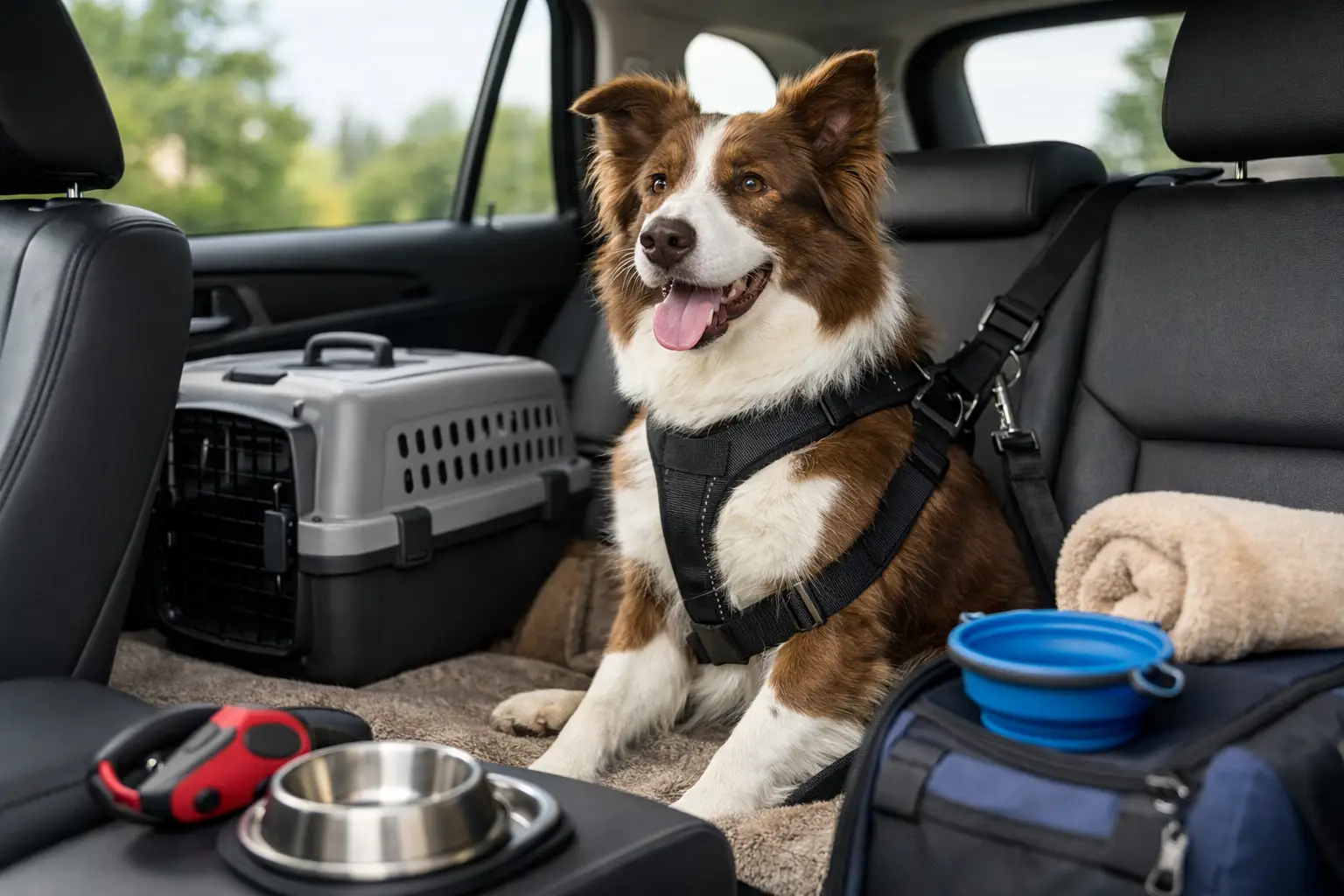
The best pet travel tips for dogs begin before the car is packed. A great trip is not measured by how far you go or how many stops you make. It is measured by whether your dog feels safe, comfortable, and included along the way.
Dogs notice the change in routine long before departure. Suitcases, unfamiliar sounds, skipped walks, and a rushed goodbye to home can all add pressure. Thoughtful preparation gives your dog time to adjust and gives you a clearer plan when the unexpected happens.
Pet travel tips for dogs: start with your dog's needs
Not every dog experiences travel the same way. A confident dog who loves car rides may be ready for a weekend away with a little planning. A dog who becomes nauseated, fearful, reactive, or overwhelmed in new places may need shorter practice trips first.
Consider your dog's age, health, energy level, temperament, and comfort around people and other animals. Puppies may need more frequent bathroom breaks and supervision. Senior dogs may need supportive bedding, easier access in and out of the vehicle, and a slower pace. Dogs with medical conditions may need a conversation with their veterinarian before a long drive or flight.
This is not about deciding whether your dog is a "good traveler." It is about building a trip around the dog you have. Some dogs thrive on an active road trip with trail walks and new scents. Others are happiest with a quiet, predictable stay and plenty of familiar downtime.
Practice before the big trip
If travel is new, start small. Take a few short drives that end somewhere pleasant, such as a favorite walking spot or a visit with a familiar person. Let your dog spend time in their travel crate or harness at home, where there is no motion or pressure.
For dogs who get carsick, avoid feeding a full meal immediately before driving and ask your veterinarian about appropriate options. Do not assume a dog will outgrow distress through repeated exposure alone. Heavy drooling, vomiting, shaking, pacing, or refusing to enter the vehicle are signs that the plan needs more support.
Build a travel setup that protects your dog
A loose dog in a moving vehicle is at risk during sudden stops, and can distract the driver. Secure your dog with a crash-tested travel crate or a properly fitted vehicle safety harness designed for car travel. The right choice depends on your dog's size, how they settle, and the vehicle itself.
The setup should allow your dog to lie down and reposition comfortably without roaming around the car. Keep them out of the front seat, where airbags can cause serious injury. Never let a dog ride in an open truck bed, even for a short distance.
Pack familiar items that make the space feel less strange: a blanket that smells like home, a favorite durable toy, food, treats, a leash, waste bags, and a portable water bowl. Bring more food and any necessary medication than you expect to use. Delays, detours, and hard-to-find stores are much easier to handle when your dog's essentials are already with you.
A simple pet travel kit should also include copies of vaccination records, your veterinarian's contact information, a current photo of your dog, and ID details. A collar with an up-to-date tag and a registered microchip add an important layer of protection if you become separated in an unfamiliar place.
Plan the route around breaks, not just arrival time
A direct route is not always the kindest route. On a road trip, most dogs benefit from a break every two to three hours, though puppies, seniors, and dogs with health needs may need stops more often. Use breaks for a leash walk, water, a bathroom opportunity, and a moment to decompress away from the noise of the road.
Choose safe places to stop. Rest areas can be busy and unfamiliar, so keep your dog leashed before opening the car door. Check the area for traffic, broken glass, discarded food, or other hazards. Even a reliably trained dog may bolt when startled in a new environment.
Temperature deserves its own plan. Cars heat up quickly, including on mild days or when windows are cracked. Never leave your dog unattended in a parked car. If an activity is not truly dog-friendly, take turns with your travel companions or choose another option.
Food routines may shift during travel, but abrupt changes can upset your dog's stomach. Keep meals familiar when possible, offer water regularly, and avoid giving large amounts of rich treats just because you are on vacation. A dog who seems quiet, refuses water, has diarrhea, or appears unusually tired may be stressed or unwell. Slow down and assess what they need.
Choose stays where your dog can settle
A pet-friendly label is a starting point, not the full picture. Before booking, confirm the property's rules on dog size, breed restrictions, number of pets, pet fees, outdoor areas, and whether dogs can be left alone in the room. Also ask about nearby walking routes and any local leash requirements.
When you arrive, do a quick room check before letting your dog explore. Look for open doors, damaged screens, accessible trash, cleaning supplies, loose cords, or food left behind by previous guests. Set up your dog's bed or crate in a quiet corner, then offer a short decompression period before heading out again.
Keep the first evening low-key when you can. A new room, hallway sounds, elevator doors, and neighboring guests can be a lot to process. A calm walk, a familiar meal, and time near you often do more for your dog's comfort than trying to fit in one more attraction.
If you need to leave your dog alone, think carefully about whether they can handle it in an unfamiliar space. A dog that is calm at home may bark, panic, or attempt to escape in a hotel room. If you are unsure, bring your dog with you to appropriate activities or adjust the itinerary.
Flying with a dog requires earlier decisions
Air travel has less flexibility than a road trip, and airline rules vary by carrier, route, season, aircraft, and dog size. Check requirements well before booking, including carrier dimensions, health documentation, cabin availability, and restrictions related to temperature or breed.
For many dogs, especially those who can safely travel in an airline-approved carrier under the seat, flying may be manageable with preparation. For others, the noise, confinement, and unfamiliar handling may create more stress than the trip is worth. Large dogs that must travel outside the cabin require especially careful consideration with a veterinarian and the airline.
Avoid sedating your dog unless a veterinarian specifically recommends it. Sedation can affect balance, breathing, and the ability to regulate body temperature, particularly during air travel. Your goal is a dog who is prepared and supported, not simply quiet.
Arrive with extra time, keep documents easy to reach, and offer a bathroom break before entering the terminal. Once you are through security, follow airport pet relief signage and give your dog calm reassurance. Your steady presence matters.
Let your dog set the pace once you arrive
Travel can be exciting, but it can also ask a lot from a dog. Watch their body language throughout the trip. Relaxed posture, normal appetite, curiosity, and regular sleep are encouraging signs. Repeated lip licking, yawning when not tired, tucked tail, hiding, panting in cool conditions, or sudden reactivity may signal stress.
When those signs show up, reduce stimulation. Skip the crowded patio, take a quieter walk, return to the room, or give your dog a break in their crate if they are crate-comfortable. Missing one planned stop is a small trade-off for protecting your dog's well-being.
The most memorable pet-friendly trips make room for both adventure and rest. With a plan that accounts for safety, comfort, and your individual dog's limits, you can spend less energy managing uncertainty and more time sharing the journey. Travel together with confidence, one well-considered mile at a time.