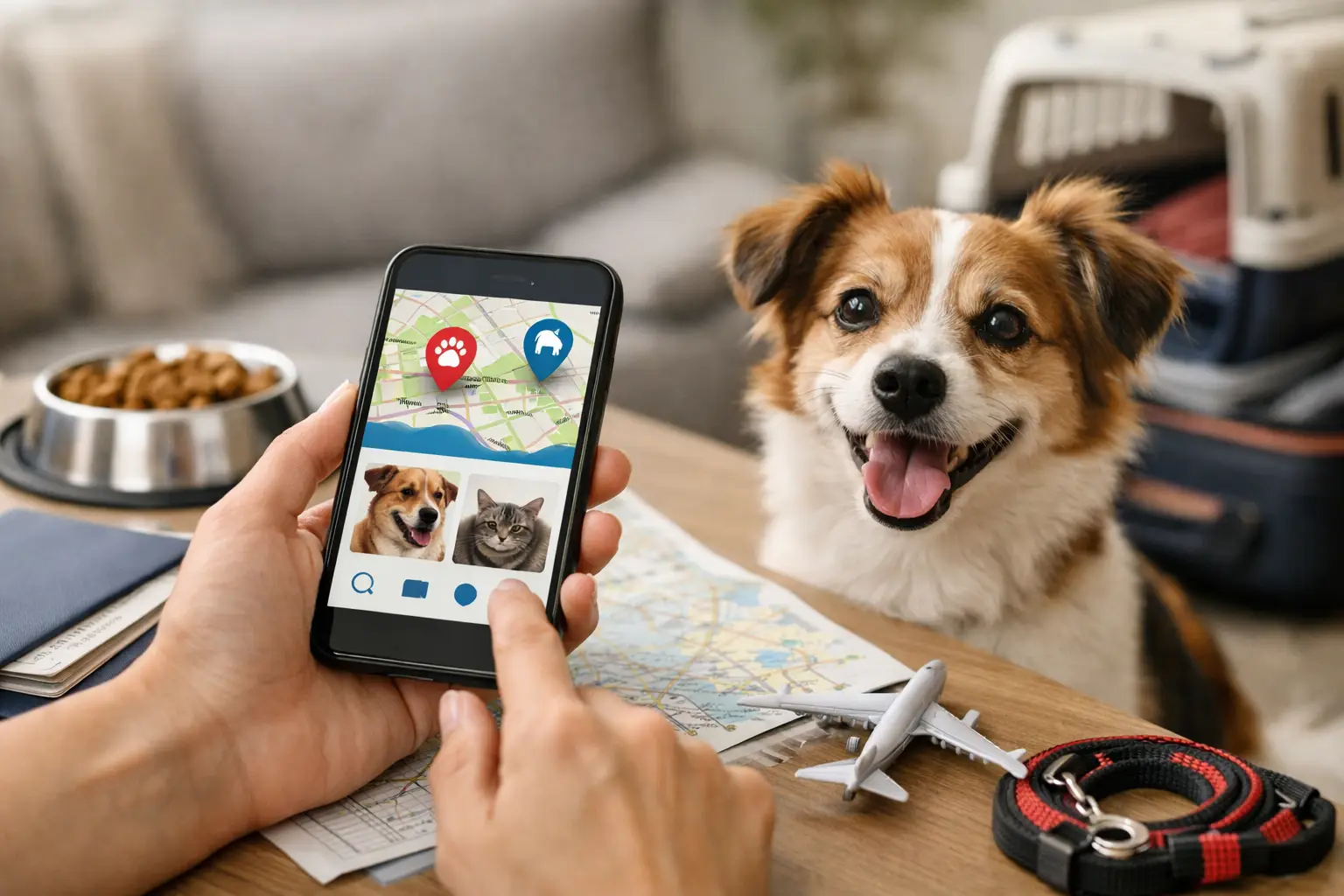
Your dog is packed before you are. The leash is by the door, the familiar blanket is folded, and the moment your cat carrier appears, your cat has an opinion. A pet travel app should make the next part of the process feel less uncertain: deciding whether the trip is right for your pet, preparing for the journey, and handling the details that can otherwise turn into last-minute stress.
Traveling with a pet is not simply regular travel with an extra bag. Your plans need to account for your pet's health, temperament, comfort, routine, and the rules that apply along the way. Whether you are driving to a family gathering, flying for a vacation, moving across the country, or planning a weekend away, clear guidance helps you make choices that put your companion first.
A Pet Travel App Starts With Your Pet, Not the Itinerary
The best trip is not always the farthest one or the most ambitious one. It is the one your pet can handle comfortably. Before comparing routes or booking a stay, a helpful app should encourage you to consider your pet's individual needs.
A confident, healthy dog that enjoys car rides may be ready for a longer road trip with regular breaks. A cat that becomes distressed in a carrier may need a slower introduction to travel, a quieter destination, or a trusted caregiver at home. Age matters, too. Puppies, kittens, senior pets, and animals managing medical conditions may need different preparation and veterinary guidance.
This is not about excluding pets from meaningful experiences. It is about making responsible decisions that support them. When owners understand what their pet needs before departure, they are better able to choose a destination, transportation method, and travel pace that work for everyone.
A useful app can turn broad questions into manageable ones. How does your pet respond to unfamiliar sounds? Can they settle in a crate or carrier? Will the climate be comfortable? How long can they travel between exercise, water, or litter-box breaks? Those answers shape a more realistic plan than a generic pet-friendly label ever could.
What a Pet Travel App Should Help You Organize
Pet travel involves many small decisions, and small decisions are easy to miss when you are juggling reservations, packing, and departure times. The right digital companion brings relevant information together so you can focus on your trip instead of searching for answers in scattered places.
Requirements should be clear and easy to check
Rules can vary by destination, travel method, lodging provider, and even the size or type of animal. Airlines may have carrier dimensions, breed considerations, health documentation rules, and limits on the number of pets allowed in a cabin. Hotels may charge fees, limit pets by weight, or restrict where animals can go on the property. Interstate or international travel can introduce health certificates, vaccination records, identification requirements, and timing considerations.
A pet travel app should help you understand which questions to ask early. It cannot replace official guidance, a veterinarian, or confirmation directly from a travel provider. But it can help you create a clearer path: identify what may apply to your trip, gather your pet's records, and leave enough time to verify the details before you commit.
That timing matters. A requirement discovered the night before departure can change the entire trip. A requirement checked weeks ahead is simply another item on a plan.
Preparation should fit the way you travel
Road trips and flights demand different preparation, but both benefit from routine. For a drive, your pet may need a secure harness, crate, or travel carrier; access to water; scheduled rest stops; and a safe plan for never leaving them alone in a hot or cold vehicle. For air travel, carrier training, airport timing, paperwork, and your pet's ability to cope calmly in a confined space deserve extra attention.
Packing should also be practical rather than excessive. Food your pet tolerates, water, medications, a leash or harness, waste bags, a current ID tag, cleaning supplies, and familiar comfort items cover many common needs. Cats may need litter, a compact litter setup, and a quiet place to decompress at the destination. Dogs may benefit from a familiar bed or toy that helps a new room feel less unfamiliar.
The goal is not to pack for every possible scenario. It is to bring what helps your pet remain safe, comfortable, and recognizable to themselves when their surroundings change.
Your plan needs room for real life
Even a well-planned trip can change. Traffic builds, a flight is delayed, weather shifts, or your pet needs more time to settle than expected. A dependable planning resource helps you think beyond the ideal itinerary.
Build in time for breaks rather than treating them as interruptions. Choose accommodations where your pet can rest comfortably. Keep records and essential supplies accessible rather than buried in luggage. Have a backup idea if a stop does not feel safe or if your pet is showing signs of stress.
Watch for changes in behavior. Excessive panting, trembling, pacing, vocalizing, hiding, refusing food, or repeated attempts to escape can signal discomfort. Some pets need a short break and reassurance. Others may be telling you that the plan needs to change. Listening to that message is part of traveling together responsibly.
Confidence Comes From Better Decisions, Not Perfect Trips
There is no single checklist that makes every pet travel experience easy. What works for a social, energetic dog may be overwhelming for a sensitive cat. A destination that welcomes pets may still have crowds, heat, stairs, unfamiliar noises, or limited green space. Pet-friendly is a starting point, not a guarantee that it is a good fit for your animal.
That is why confidence should not mean pushing through every obstacle. It means knowing how to evaluate your options and being willing to adjust. Maybe you select a closer destination for your pet's first overnight trip. Maybe you drive rather than fly. Maybe you book one extra night so no one has to rush. These are not compromises in the wrong direction. They are choices that protect the shared experience.
For experienced pet travelers, an app can also bring welcome order to familiar routines. Instead of relying on memory, you can revisit preparation steps, keep key details in mind, and consider what has changed since the last trip. A new medication, a different destination, or a pet entering their senior years can all call for a fresh plan.
360Pet is built around this pet-first approach: helping owners move from uncertainty to preparation without losing sight of the relationship at the center of the journey.
Bring the Right Questions Before You Go
Before your next trip, give yourself enough space to ask a few honest questions. Is this journey suitable for my pet? What does my pet need to feel secure during travel? Which requirements should I confirm directly? What would I do if the day does not go as planned?
The answers do not have to make travel feel complicated. They make it more intentional. When your pet's needs are part of the plan from the beginning, you can spend less energy reacting to surprises and more time enjoying the places, people, and small moments you came to share.
Your pet does not need a perfect trip. They need a prepared person beside them, paying attention and ready to make the next good decision.